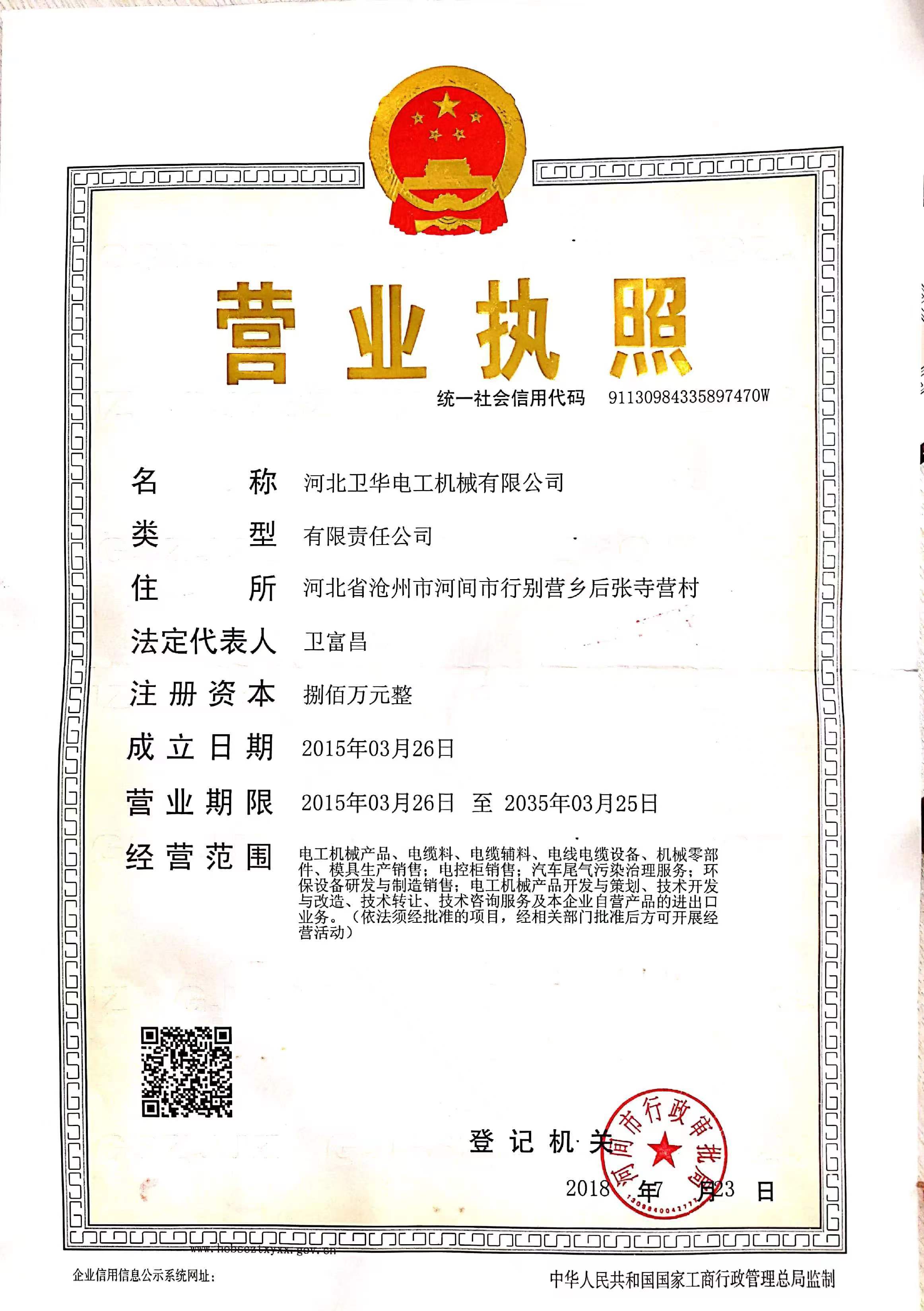
Weihua Electrical Machinery is a professional manufacturer of electrical machinery products integrating design, production, sales and service.




Exploring the Innovations in Cable Production Lines for Enhanced Efficiency
2026-05-05 10:50

In the ever-evolving electrical and wiring industry, the cable production line stands at the forefront of manufacturing technology. A well-optimized cable production line is essential for producing high-quality electrical wires and cables efficiently. Understanding the components and processes involved in modern cable production lines can significantly impact both productivity and product quality.
At the heart of a cable production line is the extrusion process. This involves heating materials, typically thermoplastic polymers, and forcing them through a die to create a continuous cable sheath. The precision of the extrusion process is crucial; it ensures that the cable insulation is uniform, which is vital for performance and safety. Advanced extrusion lines now feature digital control systems that monitor temperature and pressure in real-time, allowing for adjustments that ensure optimal processing conditions.
Another critical element is the wire drawing process, where metal rods are drawn through a series of dies to reduce their diameter and increase their length. This process not only affects the physical properties of the wire but also its electrical conductivity. Modern cable production lines incorporate automated wire drawing machines equipped with sensors that monitor wire thickness and tensile strength, ensuring consistent quality throughout the production run.
Cable production lines also integrate various technologies for additional processes such as cabling, stranding, and armoring. Stranding involves twisting together multiple wire strands to form a cable, which increases flexibility and strength. Advanced stranding machines can produce various configurations of wire bundles, catering to specific application requirements. Furthermore, the application of armor or shielding materials is critical for protecting cables from environmental factors and electromagnetic interference.
Quality assurance is another vital aspect of cable production lines. Automated inspection systems use advanced imaging technologies to identify defects in real-time. These systems can detect issues such as insulation thickness variations, surface defects, and dimensional inaccuracies, which helps in maintaining high standards of quality control throughout the manufacturing process.
The benefits of modern cable production lines extend beyond just efficiency and quality. Automation and digitization in cable production also contribute to reduced labor costs and increased safety. By implementing IoT (Internet of Things) technologies, manufacturers can collect and analyze data from their production lines, leading to insights that can drive further optimization and reduce downtime.
In conclusion, understanding the complexities and innovations in cable production lines is essential for manufacturers in the electrical and wiring industry. By leveraging advanced technologies in extrusion, drawing, and quality assurance, businesses can enhance their production capabilities and ensure the consistent delivery of high-quality cables. Investing in the latest cable production line technologies not only improves efficiency but also positions manufacturers to meet the growing demands of the market effectively.
Exploring the Innovations in Cable Production Lines for Enhanced Efficiency
recommend reading
Key Features to Look for in a Cold Feed Rubber Extruder for Electrical Wiring
Key Features to Look for in a Cold Feed Rubber Extruder for Electrical Wiring Understanding Cold Feed Rubber Extruders Cold feed rubber extruders play a crucial role in the manufacturing of electrical wiring. These machines process raw rubber materials into various forms, ensuring they meet specific standards for electrical applications. Understanding the key features of cold feed rubber extruders
Understanding Rubber Extruders: Key Insights for the Electrical Industry
In the electrical and cable industry, the rubber extruder plays a pivotal role in the manufacturing process, particularly when it comes to producing insulation and jacketing for wires and cables. A rubber extruder is a machine that shapes rubber materials into specific profiles or forms by forcing them through a die. Understanding the fundamentals of rubber extruders can significantly enhance oper
The Essential Guide to Cable Types in Production Lines
The Essential Guide to Cable Types in Production Lines Table of Contents Introduction to Cable Types in Production Lines Understanding Different Types of Cables Single-Core vs. Multi-Core Cables: Which Is Right for You? Types of Cables Commonly Used in Production Lines Power Cables Control Cables Data Cables Specialty Cables
The Essential Role of Plastic Extruders in Cable Manufacturing
Plastic extruders play a pivotal role in the modern manufacturing of electrical wires and cables, particularly in the creation of insulation and protective coatings that ensure durability and performance. These machines are designed to melt plastic pellets and then force the molten material through a die to create continuous shapes, making them indispensable in the production of various cable comp
Comparative Analysis: Different Types of Wire and Cable Extrusion Production Lines
Comparative Analysis: Different Types of Wire and Cable Extrusion Production Lines Introduction to Wire and Cable Extrusion Extrusion is a critical process in the production of wires and cables. This procedure involves forcing molten material through a die to create a continuous product with a fixed cross-sectional profile. In the context of the electrical industry, wires and cables are pivotal fo
Understanding Cold Feed Rubber Extruders: A Key Component in Electrical Wire and Cable Manufacturing
In the realm of electrical wire and cable manufacturing, the cold feed rubber extruder stands out as a pivotal technology. This specialized piece of equipment is designed to process rubber compounds at ambient temperatures, offering several advantages over traditional extrusion methods. Understanding the functionality and benefits of cold feed rubber extruders can help manufacturers optimize their