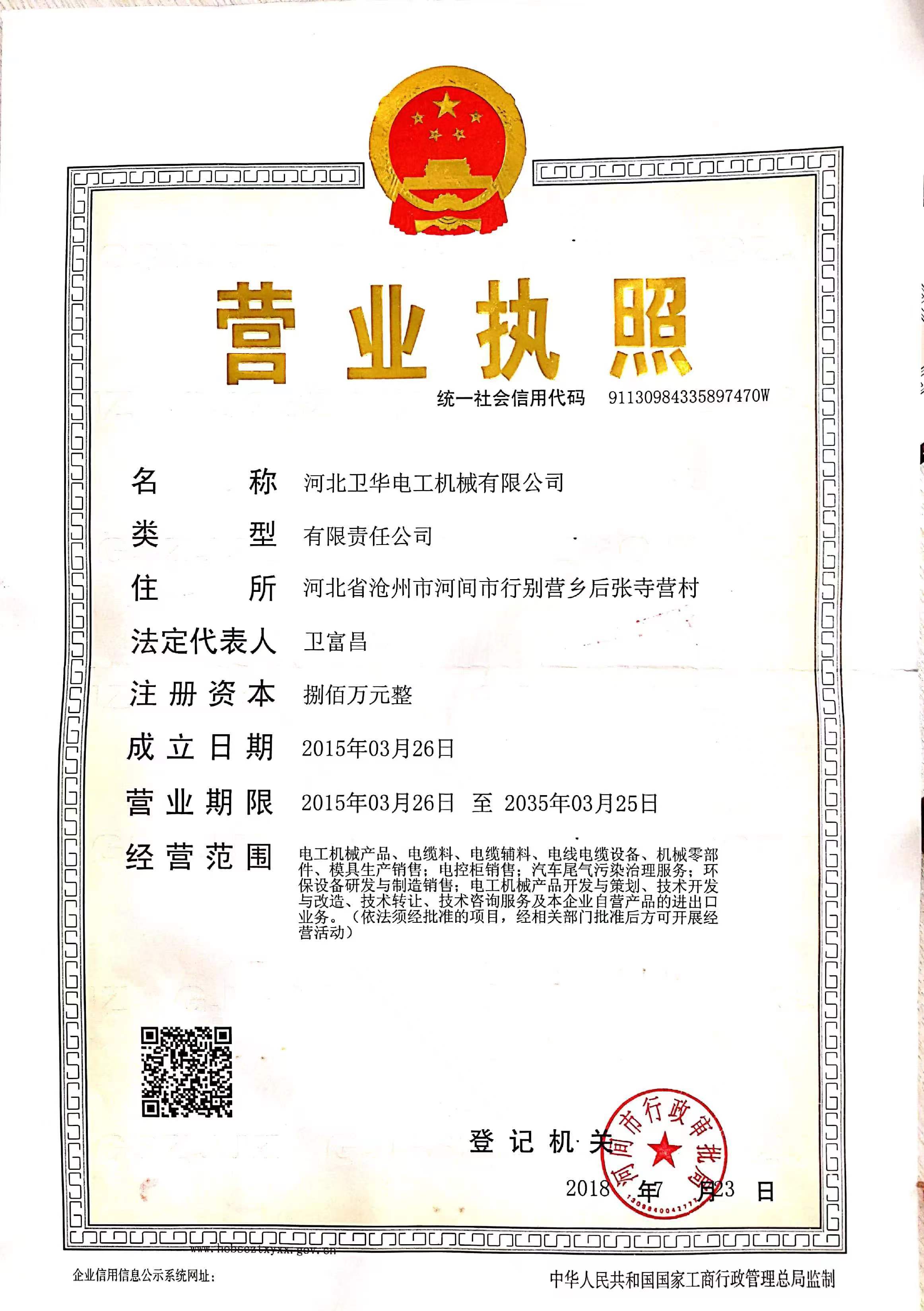
Weihua Electrical Machinery is a professional manufacturer of electrical machinery products integrating design, production, sales and service.




What is the vulcanizer of rubber continuous vulcanization production line? How to maintain it?
2023-01-31 16:26
What is the vulcanizer of rubber continuous vulcanization production line? How to maintain it?

Rubber continuous vulcanization production line vulcanizing machine performance:
1.PLC and HMI control can realize manual and automatic control. Automatic control can realize mold closing, exhaust, temperature control, vulcanization timing, alarm, mold opening, mold unloading and other functions. The touch screen displays the temperature of each heating area of the hot plate in real time.
2. The hydraulic cylinder is made of ZG270-500 material, and the plunger is made of dense chilled alloy cast iron, which is finely ground after casting. The sealing form of the hydraulic cylinder is YX sealing ring.
3. The hot plate pan adopts hydraulic automatic jacking iron along the edge, and the shim iron on both sides of the hot plate advances and retreats at the same time under the action of four oil cylinders; Both ends of the hot plate are provided with anti-shim iron overlap devices.
4. Each heating zone of the hot plate has a set of valves to adjust the temperature. Under the control of PLC, the temperature of each heating zone of the hot plate is guaranteed to be uniform.
5. Hydraulic system: domestic and foreign well-known brand hydraulic station. Under the control of PLC, it can realize automatic mold clamping, exhaust, mold opening and mold unloading.
6. Mechanical synchronous balance mechanism: there is a synchronous shaft running through the unit under the platform, and the two ends of the shaft are equipped with gears and racks to ensure the horizontal lifting of the platform.
7. Mold clamping guide device: mold clamping guide device is arranged on both sides of the lower pad platform, and guide seats are installed on the frame plate and platform. The guide seat is machined with an inclined plane, and the distance of the inclined plane can be adjusted by the top wire.
8. Auxiliary mold opening mechanism: When opening the mold, the four oil cylinders set below the platform act to forcibly pull down the platform to prevent the phenomenon of sticking the pot and not opening the mold.
Maintenance of vulcanizing machine for rubber continuous vulcanization production line:
1. The storage environment of the vulcanizing machine should be kept dry and well ventilated to avoid wet circuits;
2. Do not use the vulcanizer outdoors in rainy days to prevent water from entering the electric control box and heating plate;
3. If the working environment is humid and watery, when disassembling and transporting the vulcanizer, the ground should be padded with items, and the vulcanizer should not be in direct contact with water;
4. If water enters the heating plate due to improper operation during use, you should first contact the manufacturer for maintenance. If emergency repair is needed, open the cover plate on the heating plate, pour out the water first, then turn the electric control box to manual, heat to 100, keep the temperature for half an hour, dry the line, and stick the tape manually. At the same time, timely contact the manufacturer for full line replacement;
5. When the vulcanizer is not used for a long time, the heating plate is heated once every half a month (the temperature is set to 100), and the temperature is kept for about half an hour;
After each use, the water in the water clip should be cleaned, especially in winter. If the water cannot be cleaned, the rubber of the water clamp will age prematurely and the service life of the water clamp will be reduced.
The correct drainage method is after curing insulation and before the vulcanizer is disassembled. If the water is drained after the machine is disassembled, the water in the water pressure plate may not be completely drained.
What is the vulcanizer of rubber continuous vulcanization production line? How to maintain it?
recommend reading
Key Features to Look for in a Cold Feed Rubber Extruder for Electrical Wiring
Key Features to Look for in a Cold Feed Rubber Extruder for Electrical Wiring Understanding Cold Feed Rubber Extruders Cold feed rubber extruders play a crucial role in the manufacturing of electrical wiring. These machines process raw rubber materials into various forms, ensuring they meet specific standards for electrical applications. Understanding the key features of cold feed rubber extruders
Understanding Rubber Extruders: Key Insights for the Electrical Industry
In the electrical and cable industry, the rubber extruder plays a pivotal role in the manufacturing process, particularly when it comes to producing insulation and jacketing for wires and cables. A rubber extruder is a machine that shapes rubber materials into specific profiles or forms by forcing them through a die. Understanding the fundamentals of rubber extruders can significantly enhance oper
The Essential Guide to Cable Types in Production Lines
The Essential Guide to Cable Types in Production Lines Table of Contents Introduction to Cable Types in Production Lines Understanding Different Types of Cables Single-Core vs. Multi-Core Cables: Which Is Right for You? Types of Cables Commonly Used in Production Lines Power Cables Control Cables Data Cables Specialty Cables
The Essential Role of Plastic Extruders in Cable Manufacturing
Plastic extruders play a pivotal role in the modern manufacturing of electrical wires and cables, particularly in the creation of insulation and protective coatings that ensure durability and performance. These machines are designed to melt plastic pellets and then force the molten material through a die to create continuous shapes, making them indispensable in the production of various cable comp
Comparative Analysis: Different Types of Wire and Cable Extrusion Production Lines
Comparative Analysis: Different Types of Wire and Cable Extrusion Production Lines Introduction to Wire and Cable Extrusion Extrusion is a critical process in the production of wires and cables. This procedure involves forcing molten material through a die to create a continuous product with a fixed cross-sectional profile. In the context of the electrical industry, wires and cables are pivotal fo
Understanding Cold Feed Rubber Extruders: A Key Component in Electrical Wire and Cable Manufacturing
In the realm of electrical wire and cable manufacturing, the cold feed rubber extruder stands out as a pivotal technology. This specialized piece of equipment is designed to process rubber compounds at ambient temperatures, offering several advantages over traditional extrusion methods. Understanding the functionality and benefits of cold feed rubber extruders can help manufacturers optimize their