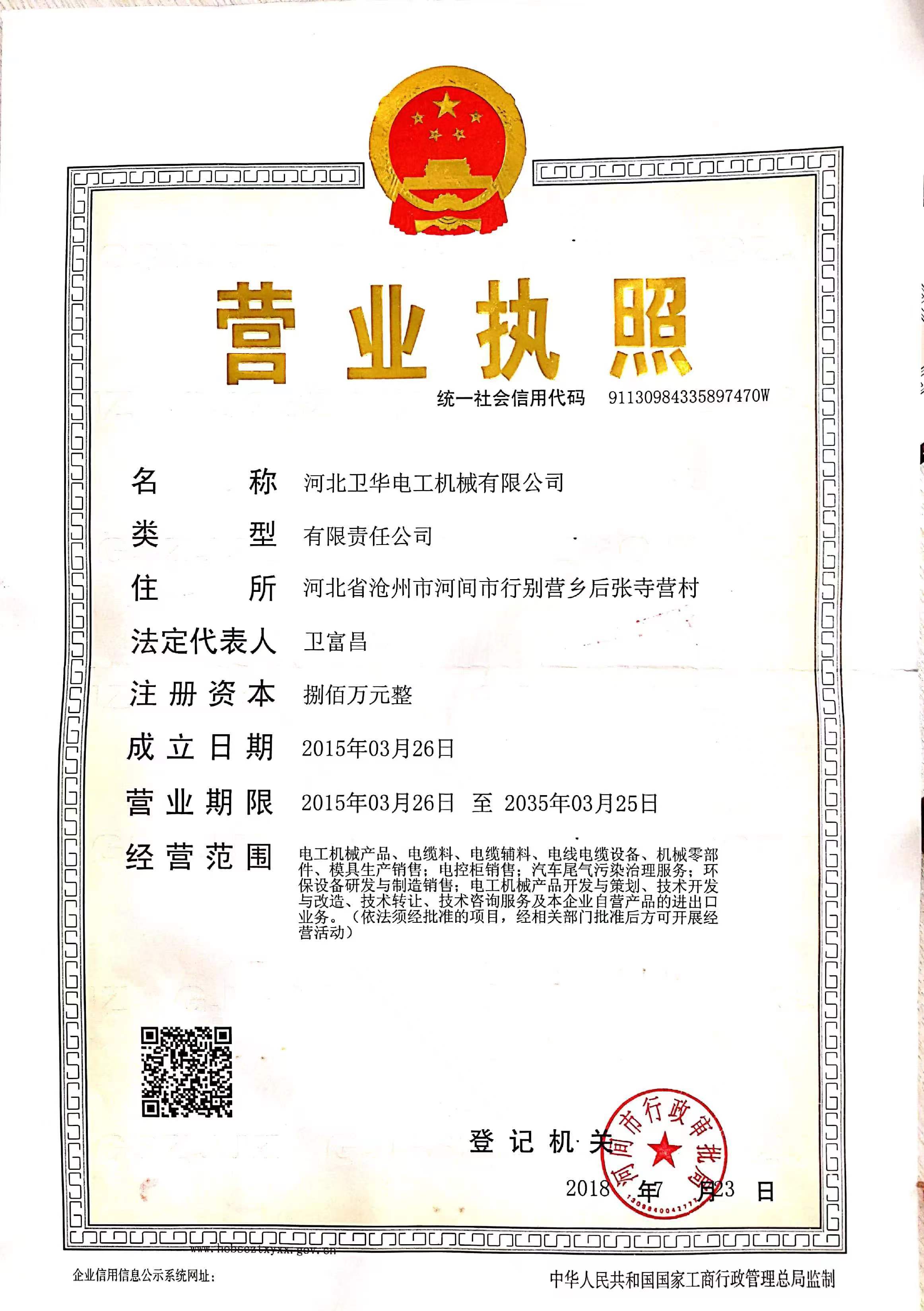
Weihua Electrical Machinery is a professional manufacturer of electrical machinery products integrating design, production, sales and service.




What is the role of rubber continuous vulcanization production line?
2023-02-02 14:24
What is the role of rubber continuous vulcanization production line?
The rubber continuous vulcanization production line has high pressure per hot plate unit area, reliable equipment operation and low maintenance. The main function of the plate vulcanizer is to provide the pressure and temperature required for vulcanization. The pressure is generated by the hydraulic system through the hydraulic cylinder, and the temperature is provided by the heating medium (usually steam). According to the frame structure, the flat plate vulcanizing machine can be divided into column flat plate vulcanizing machine and frame flat plate vulcanizing machine. Depending on the number of working layers, there may be single and double layers. According to the working medium of the hydraulic system, it can be divided into hydraulic pressure and water pressure.
The working principle of the flat vulcanizer of the rubber continuous vulcanization production line: When the flat vulcanizer is working, the hot plate heats the rubber, so that the rubber molecules cross, from the linear structure to the network structure. It is a product with certain physical and mechanical properties, but the adhesive begins to soften after being heated, and the moisture and volatile substances in the adhesive need to be gasified.

At this time, the hydraulic cylinder exerts sufficient pressure to fill the rubber in the model to limit the generation of bubbles and make the product structure tight. If it is a tape product, you can stick the adhesive and the cloth firmly together. In addition, sufficient pressure is applied to the uneven surface of the mold to prevent edge overflow, insufficient pattern adhesive, porous sponge, etc.
Rubber continuous vulcanization production line Rubber sheet vulcanizer is mainly used for vulcanizing tape. Its advantages are high pressure per unit area of hot plate, reliable operation of equipment and low maintenance cost. The main function of the vulcanizer is to provide the pressure and temperature required for vulcanization. The pressure is generated by the hydraulic system and the temperature is provided by the heating medium. According to the different working layers, it can be divided into one layer and two layers. According to the working medium of the hydraulic system, it can be divided into hydraulic pressure and water pressure.
The flat vulcanizing machine used in our country in the past is a column structure, and now it adopts a frame structure. The frame platform type plane vulcanizing machine has certain advantages over the column platform type plane vulcanizing machine.
Rubber continuous vulcanization production line hot press molding machine (flat vulcanizer, rubber vulcanizer, small flat press, automatic press) is a suitable for rubber and plastic industry in the polymer (such as PVC, masterbatch and other chemical raw materials mixing processing and material testing) molding machine. It can be used as the material basis before factory mass production. Put the plastic or rubber raw material into the mold, sandwiched between the upper and lower electric heating plates, and apply pressure under the intelligent temperature control of the electric heating plate to make the raw material shape.
The characteristics of rubber continuous vulcanization production line rubber flat vulcanizing machine are as follows:
1. Heater: Built-in electric mold heater, high power, long heat conduction and long service life.
2. Decreasing rod: rotating structure, sensitive temperature measurement, fast cooling and high precision.
3. Electric heating plate: high-temperature high-quality alloy (electric heating high-temperature die steel), with high hardness, no deformation, thermal conductivity, corrosion resistance and other characteristics.
4. Pressure system: Imported oil cylinder and control pressure system are adopted, with stable pressure and no noise.
What is the role of rubber continuous vulcanization production line?
recommend reading
Key Features to Look for in a Cold Feed Rubber Extruder for Electrical Wiring
Key Features to Look for in a Cold Feed Rubber Extruder for Electrical Wiring Understanding Cold Feed Rubber Extruders Cold feed rubber extruders play a crucial role in the manufacturing of electrical wiring. These machines process raw rubber materials into various forms, ensuring they meet specific standards for electrical applications. Understanding the key features of cold feed rubber extruders
Understanding Rubber Extruders: Key Insights for the Electrical Industry
In the electrical and cable industry, the rubber extruder plays a pivotal role in the manufacturing process, particularly when it comes to producing insulation and jacketing for wires and cables. A rubber extruder is a machine that shapes rubber materials into specific profiles or forms by forcing them through a die. Understanding the fundamentals of rubber extruders can significantly enhance oper
The Essential Guide to Cable Types in Production Lines
The Essential Guide to Cable Types in Production Lines Table of Contents Introduction to Cable Types in Production Lines Understanding Different Types of Cables Single-Core vs. Multi-Core Cables: Which Is Right for You? Types of Cables Commonly Used in Production Lines Power Cables Control Cables Data Cables Specialty Cables
The Essential Role of Plastic Extruders in Cable Manufacturing
Plastic extruders play a pivotal role in the modern manufacturing of electrical wires and cables, particularly in the creation of insulation and protective coatings that ensure durability and performance. These machines are designed to melt plastic pellets and then force the molten material through a die to create continuous shapes, making them indispensable in the production of various cable comp
Comparative Analysis: Different Types of Wire and Cable Extrusion Production Lines
Comparative Analysis: Different Types of Wire and Cable Extrusion Production Lines Introduction to Wire and Cable Extrusion Extrusion is a critical process in the production of wires and cables. This procedure involves forcing molten material through a die to create a continuous product with a fixed cross-sectional profile. In the context of the electrical industry, wires and cables are pivotal fo
Understanding Cold Feed Rubber Extruders: A Key Component in Electrical Wire and Cable Manufacturing
In the realm of electrical wire and cable manufacturing, the cold feed rubber extruder stands out as a pivotal technology. This specialized piece of equipment is designed to process rubber compounds at ambient temperatures, offering several advantages over traditional extrusion methods. Understanding the functionality and benefits of cold feed rubber extruders can help manufacturers optimize their