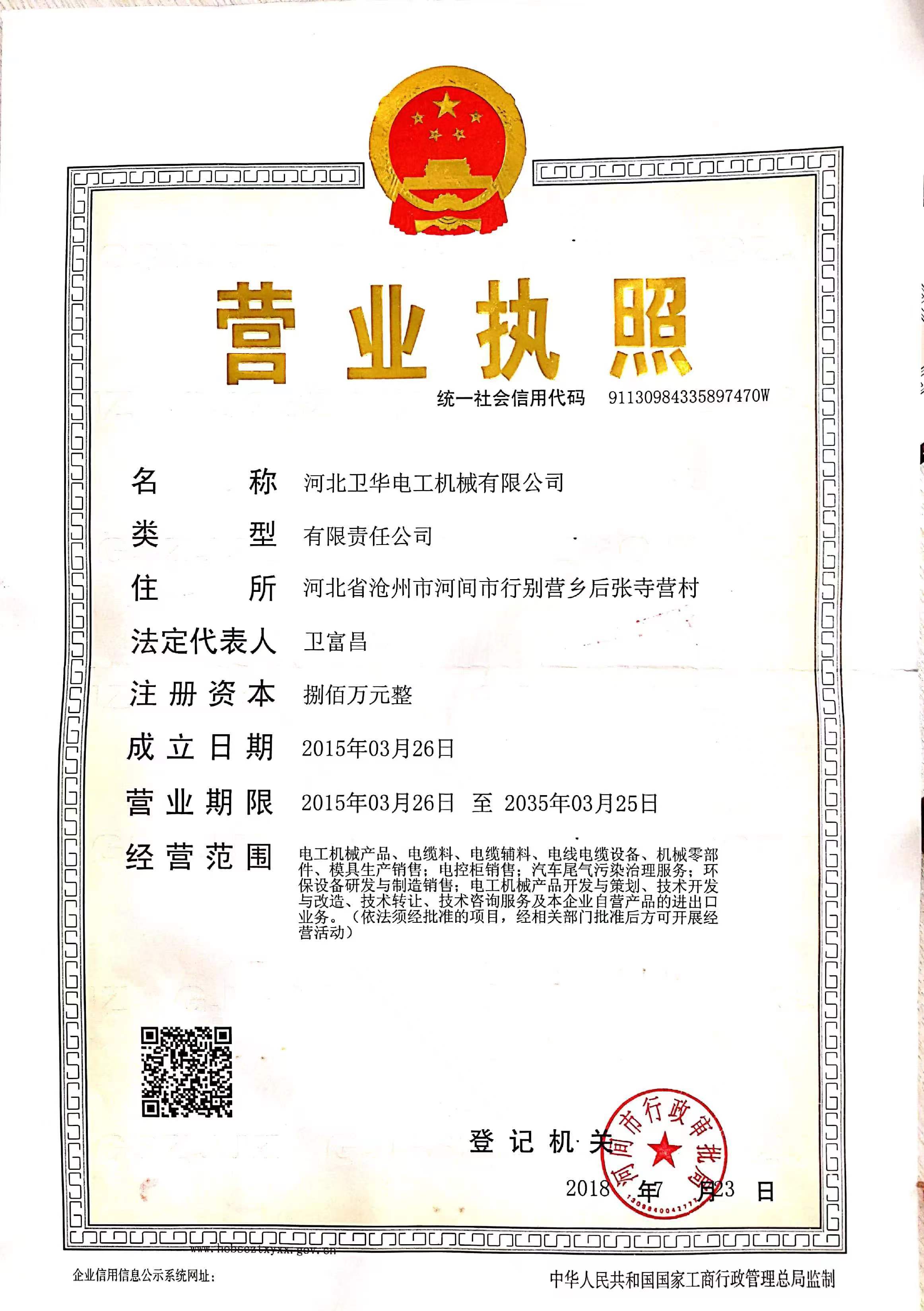
Weihua Electrical Machinery is a professional manufacturer of electrical machinery products integrating design, production, sales and service.




Analysis of medium voltage XLPE insulated power cable shielding
2022-05-13 16:05

Shielding plays an important role in medium voltage cross-linked polyethylene. It can improve the uniformity of electric field distribution. According to the standard understanding, shielding is divided into non-metallic shielding (conductor shielding, insulation shielding) and metal shielding (copper tape, copper wire).
The medium voltage cross-linked cable now uses a tight circular conductor structure. On the one hand, the electric field on the surface of the conductor, on the other hand, I understand that it plays a role in blocking water. However, even if such a tight pressing method is adopted, there are still tiny gaps between the conductor monofilaments, which will inevitably lead to the uniformity of the electric field distribution and the fine burrs generated during the conductor stranding, which will lead to the increase of partial discharge and serious breakdown. The cross-linked conductor shield then contributes to this aspect of the defect and enables close contact between the insulation. The function of the insulation shield is also to reduce the air gap between the insulation and the copper strip, and to uniformly insulate the surface electric field.
The volume resistivity of the cross-linked insulation shield exceeds the standard requirements, which is easy to cause the increase of the discharge capacity, so the control of the volume resistivity of the raw material inspection is very important. The role of copper tape shielding is to be used as a channel for leakage current when a short circuit occurs, and to work through capacitive current and lightning protection.
During the partial discharge withstand voltage test of the finished product, a section of the insulation shield should also be stripped off. Generally, the end of 8.7/10 kV cable is rarely broken down. Why is the breakdown rate of 26/35 kV cable end very high? And the breakdown points are all 2-3mm below the semi-conductive port. The analysis is:
1. As the voltage increases, the electric field strength increases gradually.
2. The shielding stripping length is not enough and the semi-conductive port is not smooth.
3. The installation of stress cone is not in place. These aspects are the main causes of terminal breakdown. The treatment method is to increase the stripping length of the insulation shield. According to experience, it is advisable to not less than 70cm. The screw of the stress cone is installed 2mm above the semi-conductive port. For non-smooth treatment, the glass can be gently scraped flat, but the insulation cannot be damaged.
Domestic indoor and outdoor terminal accessories are now mainly cold shrinkage, the technology is basically no problem, the key is the treatment of shielding.
If the treatment is not good, it is easy to cause terminal breakdown. The key is the treatment of the outer shielding opening. According to relevant data, the accessory breakdown caused by improper control of the semi-conductive opening is higher than that of other reasons, because the electric field here is relatively concentrated and the treatment of the semi-conductive opening should be smooth. For example, 35 kV cross-linked cables now mostly use non-strippable outer shielding materials.
Only by stripping and cutting the semi-conductive with a stripping knife, the closing may not be very smooth, and thin glass can be used to scrape a slope in the arc of the semi-conductive opening, which is beneficial to the improvement of electric field uniformity.
The application or improvement of shielding technology in cross-linked cables will continue to improve with the development of the information society. Only by continuously exploring and discovering, will many problems be discovered, and continue to verify through practice, so as to improve product quality.

Analysis of medium voltage XLPE insulated power cable shielding
recommend reading
Key Features to Look for in a Cold Feed Rubber Extruder for Electrical Wiring
Key Features to Look for in a Cold Feed Rubber Extruder for Electrical Wiring Understanding Cold Feed Rubber Extruders Cold feed rubber extruders play a crucial role in the manufacturing of electrical wiring. These machines process raw rubber materials into various forms, ensuring they meet specific standards for electrical applications. Understanding the key features of cold feed rubber extruders
Understanding Rubber Extruders: Key Insights for the Electrical Industry
In the electrical and cable industry, the rubber extruder plays a pivotal role in the manufacturing process, particularly when it comes to producing insulation and jacketing for wires and cables. A rubber extruder is a machine that shapes rubber materials into specific profiles or forms by forcing them through a die. Understanding the fundamentals of rubber extruders can significantly enhance oper
The Essential Guide to Cable Types in Production Lines
The Essential Guide to Cable Types in Production Lines Table of Contents Introduction to Cable Types in Production Lines Understanding Different Types of Cables Single-Core vs. Multi-Core Cables: Which Is Right for You? Types of Cables Commonly Used in Production Lines Power Cables Control Cables Data Cables Specialty Cables
The Essential Role of Plastic Extruders in Cable Manufacturing
Plastic extruders play a pivotal role in the modern manufacturing of electrical wires and cables, particularly in the creation of insulation and protective coatings that ensure durability and performance. These machines are designed to melt plastic pellets and then force the molten material through a die to create continuous shapes, making them indispensable in the production of various cable comp
Comparative Analysis: Different Types of Wire and Cable Extrusion Production Lines
Comparative Analysis: Different Types of Wire and Cable Extrusion Production Lines Introduction to Wire and Cable Extrusion Extrusion is a critical process in the production of wires and cables. This procedure involves forcing molten material through a die to create a continuous product with a fixed cross-sectional profile. In the context of the electrical industry, wires and cables are pivotal fo
Understanding Cold Feed Rubber Extruders: A Key Component in Electrical Wire and Cable Manufacturing
In the realm of electrical wire and cable manufacturing, the cold feed rubber extruder stands out as a pivotal technology. This specialized piece of equipment is designed to process rubber compounds at ambient temperatures, offering several advantages over traditional extrusion methods. Understanding the functionality and benefits of cold feed rubber extruders can help manufacturers optimize their