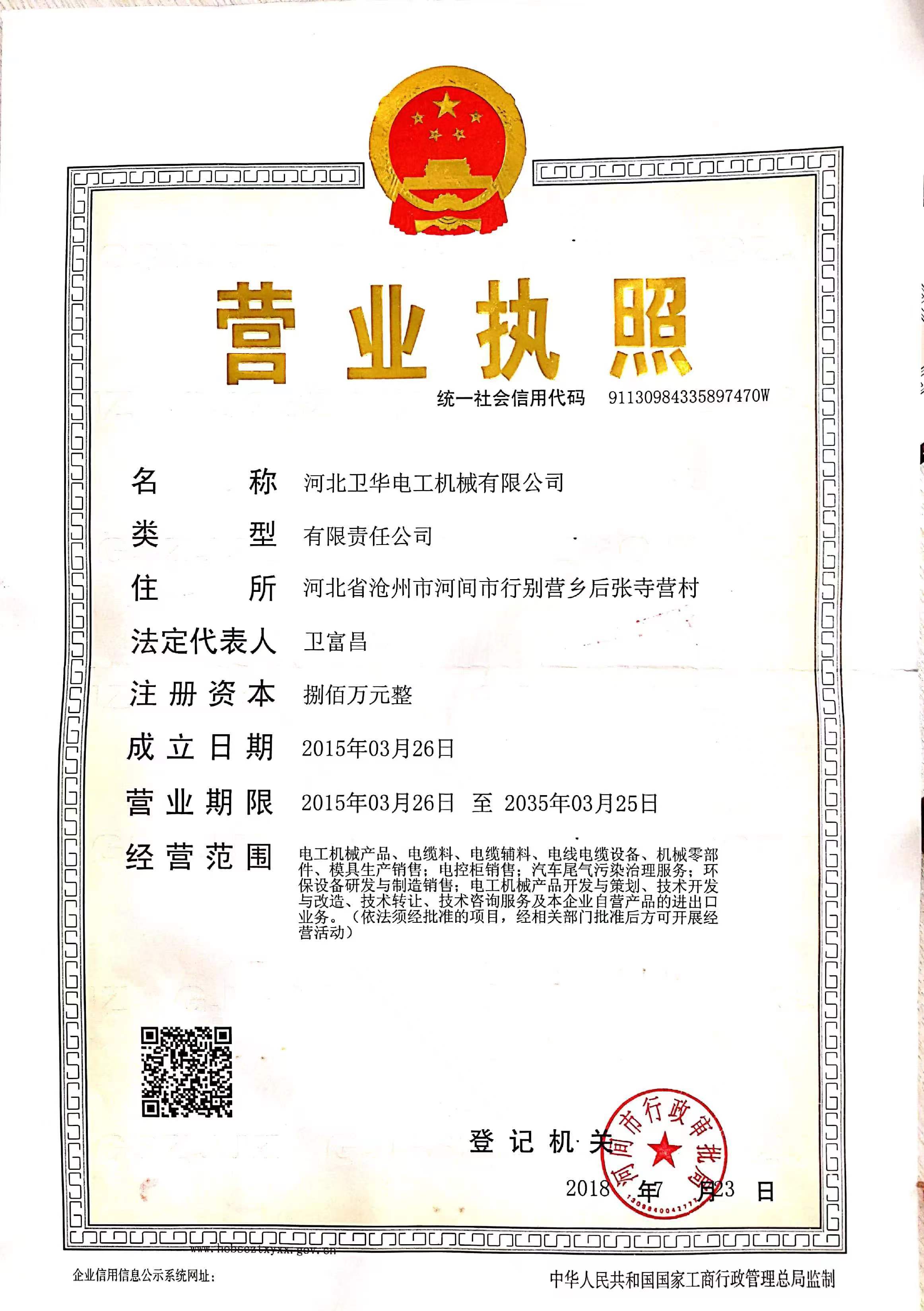
Weihua Electrical Machinery is a professional manufacturer of electrical machinery products integrating design, production, sales and service.




Plastic extruder automation level to improve
2022-05-06 15:31

The end of the manual era plastic extruder automation level. At present, China's plastic extruder market is developing rapidly, and many new models have been launched. Through the joint efforts of technology and personnel in the industry, some major models such as exhaust extruder, tandem disc screw extruder, reciprocating pin screw extruder, foaming extruder, extruder with melt gear pump, tandem multi-stage extruder, planetary screw extruder, etc. are all produced by domestic manufacturers, with independent capabilities and independent intellectual property rights.
In recent years, people have carried out a large number of theories and experiments on the screw. So far, there are nearly 100 kinds of screws, including separation type, shear type, barrier type, shunt type and wave type. From the point of view of the development of single screw, although the single screw extruder has been more perfect in recent years, but with the continuous development of polymer materials and plastic products, there will be a new type of screw and single screw extruder with characteristics.
In all chemical manufacturing industries, plastic extruders can be matched with various plastic molding auxiliaries such as pipes, films, holding materials, monofilaments, flat wires, packing belts, extruded nets, plates, special-shaped materials, granulation, cable coating, etc. to form various plastic extrusion molding production lines and produce various plastic products.
Extruders can be divided into single-screw, twin-screw and multi-screw extruders according to the number of screws. At present, the single screw extruder is widely used, which is suitable for the extrusion processing of general materials. The twin-screw extruder has less heat generated by friction, the shear of the material is relatively uniform, the conveying capacity of the screw is large, the extrusion amount is relatively stable, the material stays long in the barrel, and the mixing is uniform.
A series of conical twin-screw extruders have the characteristics of forced extrusion, wide adaptability, long service life, small shear rate, difficult decomposition of materials, good mixing and plasticizing performance, direct molding of powder, automatic temperature control, vacuum exhaust and other devices. It is suitable for the production of tubes, plates, special-shaped materials and other products.
In the plastic extrusion molding equipment, the plastic extruder is usually called the host, and the subsequent equipment supporting the plastic extrusion molding machine is called the auxiliary machine. Plastic extruder after 100 of development, has been derived from the original single screw twin-screw, multi-screw, and even no screw and other models.
With the new generation of technology, plastic extruders, plastic granulator and other equipment has long ended the era of manual feeding, people can be freed from heavy physical labor and dust flying environment, the original manual work is now completed automatically by conveying equipment, which has made great contributions to the plastics industry.

Plastic extruder automation level to improve
recommend reading
Key Features to Look for in a Cold Feed Rubber Extruder for Electrical Wiring
Key Features to Look for in a Cold Feed Rubber Extruder for Electrical Wiring Understanding Cold Feed Rubber Extruders Cold feed rubber extruders play a crucial role in the manufacturing of electrical wiring. These machines process raw rubber materials into various forms, ensuring they meet specific standards for electrical applications. Understanding the key features of cold feed rubber extruders
Understanding Rubber Extruders: Key Insights for the Electrical Industry
In the electrical and cable industry, the rubber extruder plays a pivotal role in the manufacturing process, particularly when it comes to producing insulation and jacketing for wires and cables. A rubber extruder is a machine that shapes rubber materials into specific profiles or forms by forcing them through a die. Understanding the fundamentals of rubber extruders can significantly enhance oper
The Essential Guide to Cable Types in Production Lines
The Essential Guide to Cable Types in Production Lines Table of Contents Introduction to Cable Types in Production Lines Understanding Different Types of Cables Single-Core vs. Multi-Core Cables: Which Is Right for You? Types of Cables Commonly Used in Production Lines Power Cables Control Cables Data Cables Specialty Cables
The Essential Role of Plastic Extruders in Cable Manufacturing
Plastic extruders play a pivotal role in the modern manufacturing of electrical wires and cables, particularly in the creation of insulation and protective coatings that ensure durability and performance. These machines are designed to melt plastic pellets and then force the molten material through a die to create continuous shapes, making them indispensable in the production of various cable comp
Comparative Analysis: Different Types of Wire and Cable Extrusion Production Lines
Comparative Analysis: Different Types of Wire and Cable Extrusion Production Lines Introduction to Wire and Cable Extrusion Extrusion is a critical process in the production of wires and cables. This procedure involves forcing molten material through a die to create a continuous product with a fixed cross-sectional profile. In the context of the electrical industry, wires and cables are pivotal fo
Understanding Cold Feed Rubber Extruders: A Key Component in Electrical Wire and Cable Manufacturing
In the realm of electrical wire and cable manufacturing, the cold feed rubber extruder stands out as a pivotal technology. This specialized piece of equipment is designed to process rubber compounds at ambient temperatures, offering several advantages over traditional extrusion methods. Understanding the functionality and benefits of cold feed rubber extruders can help manufacturers optimize their