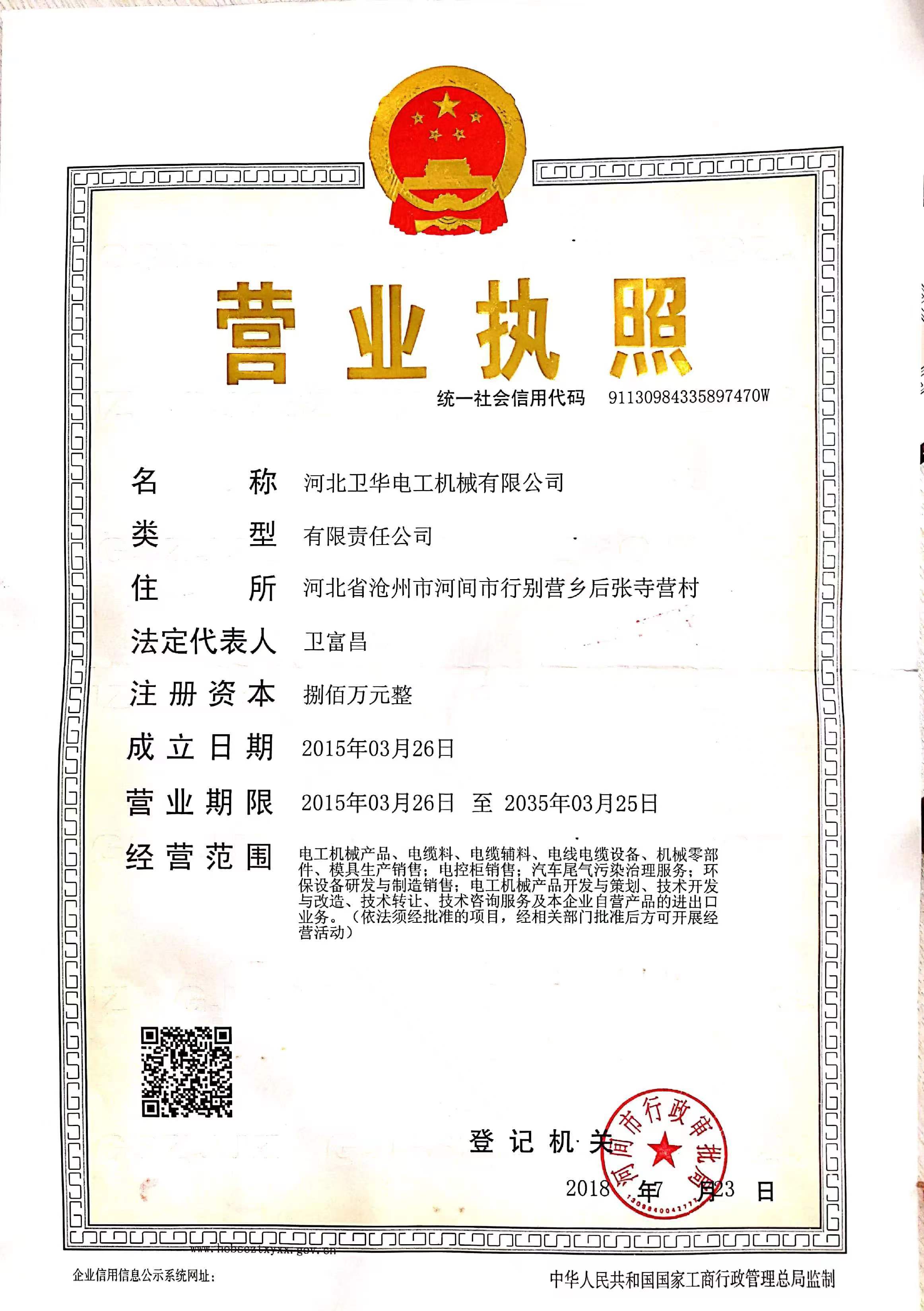
Weihua Electrical Machinery is a professional manufacturer of electrical machinery products integrating design, production, sales and service.




Plastic extruder operation maintenance
2022-05-06 15:30

Each type of product in the plastic extruder has its operating characteristics, and a detailed understanding of its operating characteristics can give full play to the efficiency of the machine. Plastic extruder is one of the types and its, grasp the operation points of the extruder, the correct and reasonable use of the extruder. The use of screw extruder includes a series of links such as installation, adjustment, commissioning, operation, maintenance and repair of the machine. Its use has the commonality of general machines, mainly in the drive motor and reduction gear. However, the working system of the screw extruder is the extrusion system, but it is characterized, and special attention should be paid to its characteristics when using the screw extruder.
The installation, adjustment and commissioning of the machine are generally clearly stipulated in the operation instructions of the extruder. Here, the operation points, maintenance and maintenance of the extruder are briefly described as follows:
Preparations before starting the 1.
The materials used for extrusion production should meet the required drying requirements, and further drying is required.
2. According to the variety and size of the product, select the specifications of the machine head, and install the machine head flange, mold body, die, perforated plate and filter screen according to the column sequence.
2, connect the compressed air pipe, install the core mold electric heating rod head heating ring, check the water system.
4. Adjust the gap between the die and check whether the main machine and the auxiliary machine are aligned.
5, start the operation of the equipment, check whether the operation is normal, found that the fault in a timely manner.
6, open the electric heater, the head, body and auxiliary uniform heating temperature, until the temperature of each part is about 10 degrees higher than the normal production temperature, constant temperature for 30~60 minutes, so that the temperature inside and outside the machine is consistent.
2. start-up operation start-up is an important link in production, poor control will damage the screw and head, the temperature is too high will cause plastic decomposition, the temperature is too low will damage the screw, barrel and head.
The boot steps are as follows:
1. Start the machine at low speed, idling, check whether the screw is abnormal, the current of the motor and ammeter is not overloaded, and whether the pressure gauge is normal. Machine idle should not be too long, to prevent the screw and barrel scraping.
2, gradually a small amount of feeding, until the material extrusion die, can be normal feeding. No one shall be in front of the die before the plastic is extruded to prevent casualties.
3. After the plastic is extruded, it is necessary to slowly lead the extrudate to cooling and shaping, traction equipment, and start these equipment in advance. Then, according to the indication value of the control instrument and the requirements for the extrusion products, the various links are properly adjusted until the extrusion operation reaches the normal state.
4. Cut and sample, check whether the appearance meets the requirements, whether the size meets the standards, test the performance, and then adjust the extrusion process according to the quality requirements to make the products meet the standard requirements.
3. shutdown operation
1. Stop feeding, squeeze out the plastic in the plastic extruder, and turn off the barrel and head power for the next operation.
2. Turn off the power supply of each auxiliary machine while turning off the power supply of the host machine.
3. Open the connecting flange of the machine head, clean the porous plate and various parts of the machine head. When cleaning, copper rods and copper sheets should be used, and a little oil should be applied after cleaning. When cleaning the screw and barrel, the screw can be pushed out from the tail and recovered after cleaning. Generally, it can be cleaned with transitional material replacement.
4, extrusion of polyolefin plastics, usually in the case of full load of the extruder shutdown (with material shutdown), then should prevent the air into the barrel, so as to avoid material oxidation and continue to affect the quality of the product during production. For PVC plastics, it can also be stopped with materials. At that time, the material door will be closed first, the temperature at the joint body (flange) of the machine head will be reduced by 10~20 degrees, and the machine will be stopped after the materials in the machine body are squeezed out.
5. Turn off the main power supply and the main cooling water valve.
Maintenance and maintenance of 4. equipment
1. The cooling water used in the extruder system is usually soft water, with hardness less than DH, carbonate-free hardness less than 2DH, and PH value 7.5~8.
2. When starting up, attention should be paid to starting up. At the same time, attention should be paid to starting the feeding device first. When stopping the feeding device, it is strictly prohibited to run the material by air.
3. After shutdown, the barrel, screw and feeding port of main and auxiliary machines shall be cleaned in time, and check whether there is any material block. It is strictly prohibited to start the machine at low temperature and reverse the belt material.
4. Daily attention should be paid to the lubrication of each lubrication point and the two tandem thrust bearings, and whether there is any leakage in the screw seal joint. If any problem is found, it should be stopped and repaired in time.
5, plastic extruder often pay attention to the abrasion of the brush in the motor, timely maintenance and replacement.

Plastic extruder operation maintenance
recommend reading
Key Features to Look for in a Cold Feed Rubber Extruder for Electrical Wiring
Key Features to Look for in a Cold Feed Rubber Extruder for Electrical Wiring Understanding Cold Feed Rubber Extruders Cold feed rubber extruders play a crucial role in the manufacturing of electrical wiring. These machines process raw rubber materials into various forms, ensuring they meet specific standards for electrical applications. Understanding the key features of cold feed rubber extruders
Understanding Rubber Extruders: Key Insights for the Electrical Industry
In the electrical and cable industry, the rubber extruder plays a pivotal role in the manufacturing process, particularly when it comes to producing insulation and jacketing for wires and cables. A rubber extruder is a machine that shapes rubber materials into specific profiles or forms by forcing them through a die. Understanding the fundamentals of rubber extruders can significantly enhance oper
The Essential Guide to Cable Types in Production Lines
The Essential Guide to Cable Types in Production Lines Table of Contents Introduction to Cable Types in Production Lines Understanding Different Types of Cables Single-Core vs. Multi-Core Cables: Which Is Right for You? Types of Cables Commonly Used in Production Lines Power Cables Control Cables Data Cables Specialty Cables
The Essential Role of Plastic Extruders in Cable Manufacturing
Plastic extruders play a pivotal role in the modern manufacturing of electrical wires and cables, particularly in the creation of insulation and protective coatings that ensure durability and performance. These machines are designed to melt plastic pellets and then force the molten material through a die to create continuous shapes, making them indispensable in the production of various cable comp
Comparative Analysis: Different Types of Wire and Cable Extrusion Production Lines
Comparative Analysis: Different Types of Wire and Cable Extrusion Production Lines Introduction to Wire and Cable Extrusion Extrusion is a critical process in the production of wires and cables. This procedure involves forcing molten material through a die to create a continuous product with a fixed cross-sectional profile. In the context of the electrical industry, wires and cables are pivotal fo
Understanding Cold Feed Rubber Extruders: A Key Component in Electrical Wire and Cable Manufacturing
In the realm of electrical wire and cable manufacturing, the cold feed rubber extruder stands out as a pivotal technology. This specialized piece of equipment is designed to process rubber compounds at ambient temperatures, offering several advantages over traditional extrusion methods. Understanding the functionality and benefits of cold feed rubber extruders can help manufacturers optimize their