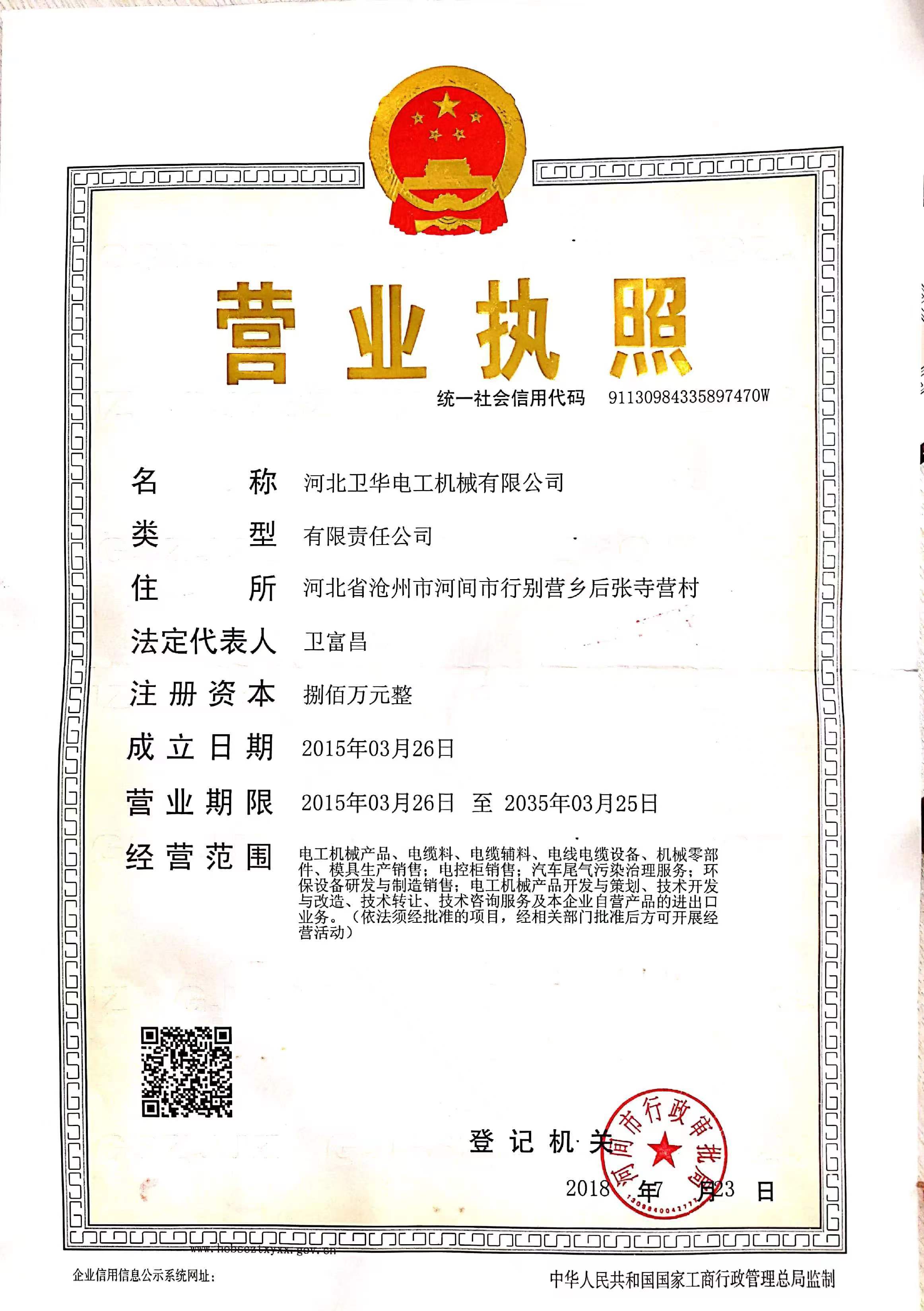
Weihua Electrical Machinery is a professional manufacturer of electrical machinery products integrating design, production, sales and service.




The Role of Automation in Wire and Cable Extrusion Production Lines: Revolutionizing Efficiency and Quality
2026-03-17 09:30

The Role of Automation in Wire and Cable Extrusion Production Lines
Introduction: Understanding the Importance of Automation
In the fast-paced world of manufacturing, particularly in the wire and cable industry, **automation** is no longer just an option; it’s a necessity. As competition intensifies and customer demands grow, companies are turning to automated solutions to streamline their **extrusion production lines**. This comprehensive guide explores the critical role automation plays in enhancing productivity, improving quality, and reducing operational costs in wire and cable extrusion production.
Table of Contents
1. What is Wire and Cable Extrusion?
2. The Importance of Automation in Manufacturing
3. Key Benefits of Automation in Extrusion Production
4. Leading Automation Technologies in Wire and Cable Production
5. Impact of Automation on Product Quality and Consistency
6. How Automation Reduces Operational Costs
7. Future Trends in Automation for Wire and Cable Manufacturing
8. Conclusion
9. FAQs
What is Wire and Cable Extrusion?
Wire and cable extrusion is a manufacturing process that involves shaping materials—typically thermoplastics—into continuous profiles. The process begins with feeding raw materials into an extruder, where they are heated, melted, and forced through a die to form a specific shape. In this sector, the quality of the extrusion directly affects the electrical and mechanical properties of the finished products. Thus, achieving uniformity and precision in this stage is vital.
The Importance of Automation in Manufacturing
Automation integrates technology into the manufacturing process, allowing for various operations to be performed with minimal human intervention. In wire and cable extrusion, automation plays a critical role in:
- **Enhancing production speeds**: Automation significantly increases the throughput of production lines, allowing for larger volumes of product to be produced in shorter timeframes.
- **Reducing human error**: By minimizing manual processes, automation reduces the likelihood of errors that can lead to defective products and rework.
- **Improving safety**: Automation helps in mitigating workplace hazards by reducing the number of personnel required on the production floor, especially in high-risk operations.
Key Benefits of Automation in Extrusion Production
The implementation of automated systems in wire and cable extrusion production lines offers numerous advantages:
1. Increased Efficiency
Automated systems can operate continuously, without the need for breaks, leading to higher output rates. For instance, advanced machinery can maintain steady operating speeds while consistently monitoring for quality, resulting in significantly reduced cycle times.
2. Enhanced Quality Control
Automation allows for real-time monitoring and adjustments during the extrusion process. Sensors and computer systems can detect deviations from quality standards immediately, ensuring that only products meeting specifications proceed through the production line.
3. Cost Savings
Although the initial investment in automation technology can be substantial, the long-term savings often outweigh these costs. By increasing production rates and reducing waste through enhanced quality control, companies can achieve a quicker return on investment.
4. Flexibility and Scalability
Modern automated systems can be programmed to accommodate various product sizes and types. This flexibility makes it easier for manufacturers to adapt to changing market demands or diversify their product offerings without significant downtime.
5. Data Collection and Analysis
Automation systems provide valuable data that can be analyzed for continuous improvement. By utilizing **IoT (Internet of Things)** technologies, companies can gather insights into their production processes, leading to informed decision-making and strategic enhancements.
Leading Automation Technologies in Wire and Cable Production
Several key technologies have emerged as leaders in automating wire and cable extrusion production lines:
1. Programmable Logic Controllers (PLCs)
PLCs are essential for coordinating various automated processes within the extrusion line. They ensure that machines operate in sync, enhancing overall efficiency.
2. Robotics
Robotic systems can be employed for tasks such as material handling, packaging, and quality inspection. Their precision and speed greatly improve production efficiency.
3. Machine Learning and AI
Artificial intelligence and machine learning algorithms can analyze data from production processes to predict maintenance needs, optimize operations, and even enhance quality assurance.
4. Advanced Sensors and Monitoring Systems
These systems provide real-time data on temperature, pressure, and material flow, enabling manufacturers to adjust processes dynamically to avoid defects.
5. SCADA Systems (Supervisory Control and Data Acquisition)
SCADA systems facilitate centralized control of the extrusion process, allowing operators to monitor and manage production remotely, thus improving operational oversight.
Impact of Automation on Product Quality and Consistency
One of the most significant advantages of automation in wire and cable extrusion is its effect on product quality. Automated systems can achieve a level of precision and consistency that is challenging to replicate with manual processes. The ability to monitor critical parameters continuously ensures that every product meets strict quality assurance standards.
1. Consistency in Output
Automation minimizes variability in production, leading to consistent output quality. This is particularly crucial in industries where cable performance is directly linked to safety and reliability.
2. Reduced Waste
With improved monitoring and control, companies can decrease material waste, leading to not only cost savings but also a more sustainable manufacturing process.
3. Enhanced Traceability
Automated systems can log every stage of production, providing a comprehensive history of each batch. This traceability is essential for quality assurance and compliance with industry standards.
How Automation Reduces Operational Costs
While the initial capital outlay for automation can be significant, the long-term operational savings are compelling:
1. Labor Savings
Automation allows companies to operate with fewer employees on the production floor, reducing labor costs associated with wages, benefits, and training.
2. Decreased Downtime
Automated systems can identify potential mechanical failures before they occur, allowing for preemptive maintenance and avoiding costly production stoppages.
3. Optimized Resource Usage
Automation helps optimize the use of raw materials, energy, and other resources, leading to reduced waste and enhanced cost-efficiency.
Future Trends in Automation for Wire and Cable Manufacturing
As technology continues to evolve, the future of automation in wire and cable extrusion looks promising:
1. Increased Integration of AI
AI will play a more significant role in predictive maintenance, optimizing production schedules, and enhancing quality assurance processes.
2. Greater Use of Collaborative Robots (Cobots)
Cobots will work alongside human operators, enhancing efficiency while ensuring safety in complex manufacturing environments.
3. Expansion of IoT Applications
The integration of IoT devices will lead to smarter factories where interconnected machines communicate with each other to optimize production flows.
4. Sustainability Focus
Future automation technologies will increasingly emphasize sustainability, focusing on reducing energy consumption and waste throughout the manufacturing process.
Conclusion
The integration of automation in wire and cable extrusion production lines has transformed the landscape of manufacturing, offering unparalleled benefits in efficiency, quality, and cost savings. As the industry continues to evolve, embracing advanced technologies will be crucial for companies looking to maintain competitiveness in a rapidly changing market. Investing in automation not only enhances productivity but also positions manufacturers for future success.
FAQs
1. What are the main advantages of automation in wire and cable extrusion?
The main advantages include increased efficiency, enhanced quality control, reduced operational costs, flexibility, and valuable data analysis.
2. How does automation improve product consistency?
Automation minimizes variability in production processes, ensuring that each product meets the same quality standards with precision.
3. What technologies are commonly used in automated extrusion lines?
Common technologies include PLCs, robotics, machine learning, advanced sensors, and SCADA systems.
4. Can automation lead to job losses in the manufacturing sector?
While automation may reduce the need for certain manual labor roles, it also creates new opportunities in areas such as technology management, maintenance, and data analysis.
5. What is the future of automation in the wire and cable industry?
The future includes increased AI integration, the use of collaborative robots, IoT applications, and a focus on sustainability in manufacturing processes.
The Role of Automation in Wire and Cable Extrusion Production Lines: Revolutionizing Efficiency and Quality
recommend reading
Key Features to Look for in a Cold Feed Rubber Extruder for Electrical Wiring
Key Features to Look for in a Cold Feed Rubber Extruder for Electrical Wiring Understanding Cold Feed Rubber Extruders Cold feed rubber extruders play a crucial role in the manufacturing of electrical wiring. These machines process raw rubber materials into various forms, ensuring they meet specific standards for electrical applications. Understanding the key features of cold feed rubber extruders
Understanding Rubber Extruders: Key Insights for the Electrical Industry
In the electrical and cable industry, the rubber extruder plays a pivotal role in the manufacturing process, particularly when it comes to producing insulation and jacketing for wires and cables. A rubber extruder is a machine that shapes rubber materials into specific profiles or forms by forcing them through a die. Understanding the fundamentals of rubber extruders can significantly enhance oper
The Essential Guide to Cable Types in Production Lines
The Essential Guide to Cable Types in Production Lines Table of Contents Introduction to Cable Types in Production Lines Understanding Different Types of Cables Single-Core vs. Multi-Core Cables: Which Is Right for You? Types of Cables Commonly Used in Production Lines Power Cables Control Cables Data Cables Specialty Cables
The Essential Role of Plastic Extruders in Cable Manufacturing
Plastic extruders play a pivotal role in the modern manufacturing of electrical wires and cables, particularly in the creation of insulation and protective coatings that ensure durability and performance. These machines are designed to melt plastic pellets and then force the molten material through a die to create continuous shapes, making them indispensable in the production of various cable comp
Comparative Analysis: Different Types of Wire and Cable Extrusion Production Lines
Comparative Analysis: Different Types of Wire and Cable Extrusion Production Lines Introduction to Wire and Cable Extrusion Extrusion is a critical process in the production of wires and cables. This procedure involves forcing molten material through a die to create a continuous product with a fixed cross-sectional profile. In the context of the electrical industry, wires and cables are pivotal fo
Understanding Cold Feed Rubber Extruders: A Key Component in Electrical Wire and Cable Manufacturing
In the realm of electrical wire and cable manufacturing, the cold feed rubber extruder stands out as a pivotal technology. This specialized piece of equipment is designed to process rubber compounds at ambient temperatures, offering several advantages over traditional extrusion methods. Understanding the functionality and benefits of cold feed rubber extruders can help manufacturers optimize their