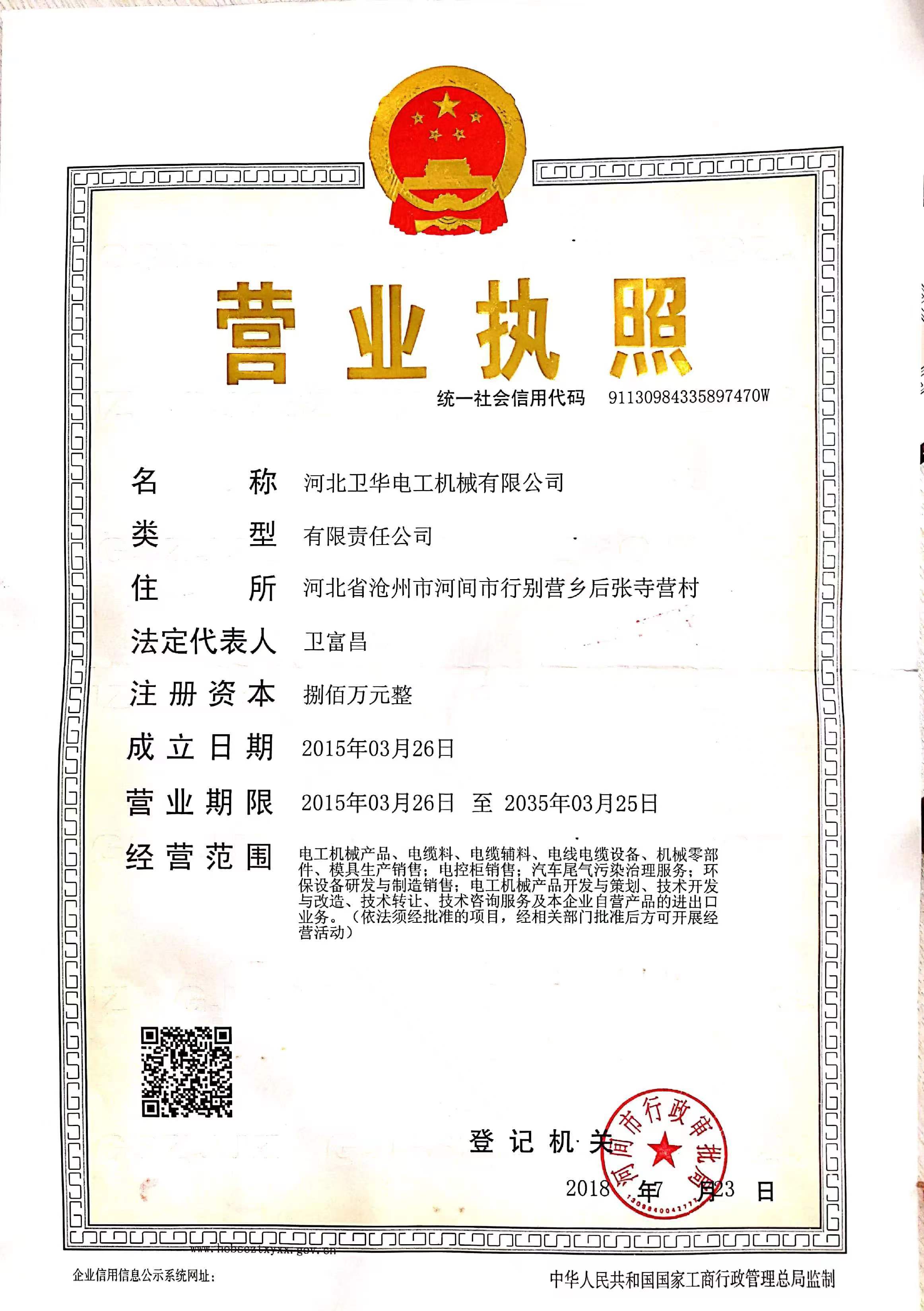
Weihua Electrical Machinery is a professional manufacturer of electrical machinery products integrating design, production, sales and service.




Wire and cable extrusion production line factory
2025-11-03 10:17

The Advantages of Modern Wire and Cable Extrusion Production Lines
The wire and cable extrusion production line represents a cornerstone of modern industrial manufacturing, enabling the creation of a vast array of essential products for power transmission, telecommunications, and electronics. The core of this process involves surrounding a conductive core with a continuous layer of insulating or sheathing material. The efficiency and quality delivered by a modern wire and cable extrusion production line are critical for meeting the diverse and stringent demands of today's markets. The advantages of these integrated systems are numerous, spanning from superior product quality and operational efficiency to remarkable versatility and environmental compliance.
A primary advantage of a contemporary wire and cable extrusion production line is its ability to ensure consistent and high-quality output. The process utilizes precision-engineered extruders that melt polymer compounds and force them through a cross-head die, applying a uniform, concentric layer onto the moving conductor. Advanced laser micrometers and online monitoring systems continuously measure the diameter and concentricity of the coating, allowing for real-time adjustments. This high level of process control minimizes material variations and defects, ensuring that every meter of cable produced meets strict electrical and mechanical specifications. The reliability of the final product is fundamentally linked to the precision of the wire and cable extrusion production line.
Furthermore, the operational efficiency of a modern wire and cable extrusion production line is a significant benefit. These systems are designed for high-speed, continuous operation, significantly boosting manufacturing throughput. Integration is key; a typical line seamlessly combines pay-off, pre-heating, extrusion, cooling, spark testing, and take-up systems into a single, synchronized unit. This integration reduces manual handling, lowers labor costs, and minimizes production downtime. The overall efficiency of a wire and cable extrusion production line directly contributes to a more competitive cost structure and the ability to fulfill large-volume orders reliably.
In conclusion, the integrated nature of the wire and cable extrusion production line provides a comprehensive solution that is fundamental to the electrical and communications industries. Its benefits in delivering consistent quality, achieving high operational efficiency, enabling product versatility, and supporting environmental goals make it an indispensable asset. As technology advances, we can anticipate further refinements in automation and control, ensuring that the wire and cable extrusion production line continues to be a driver of innovation and reliability in manufacturing.
Wire and cable extrusion production line factory
recommend reading
Key Features to Look for in a Cold Feed Rubber Extruder for Electrical Wiring
Key Features to Look for in a Cold Feed Rubber Extruder for Electrical Wiring Understanding Cold Feed Rubber Extruders Cold feed rubber extruders play a crucial role in the manufacturing of electrical wiring. These machines process raw rubber materials into various forms, ensuring they meet specific standards for electrical applications. Understanding the key features of cold feed rubber extruders
Understanding Rubber Extruders: Key Insights for the Electrical Industry
In the electrical and cable industry, the rubber extruder plays a pivotal role in the manufacturing process, particularly when it comes to producing insulation and jacketing for wires and cables. A rubber extruder is a machine that shapes rubber materials into specific profiles or forms by forcing them through a die. Understanding the fundamentals of rubber extruders can significantly enhance oper
The Essential Guide to Cable Types in Production Lines
The Essential Guide to Cable Types in Production Lines Table of Contents Introduction to Cable Types in Production Lines Understanding Different Types of Cables Single-Core vs. Multi-Core Cables: Which Is Right for You? Types of Cables Commonly Used in Production Lines Power Cables Control Cables Data Cables Specialty Cables
The Essential Role of Plastic Extruders in Cable Manufacturing
Plastic extruders play a pivotal role in the modern manufacturing of electrical wires and cables, particularly in the creation of insulation and protective coatings that ensure durability and performance. These machines are designed to melt plastic pellets and then force the molten material through a die to create continuous shapes, making them indispensable in the production of various cable comp
Comparative Analysis: Different Types of Wire and Cable Extrusion Production Lines
Comparative Analysis: Different Types of Wire and Cable Extrusion Production Lines Introduction to Wire and Cable Extrusion Extrusion is a critical process in the production of wires and cables. This procedure involves forcing molten material through a die to create a continuous product with a fixed cross-sectional profile. In the context of the electrical industry, wires and cables are pivotal fo
Understanding Cold Feed Rubber Extruders: A Key Component in Electrical Wire and Cable Manufacturing
In the realm of electrical wire and cable manufacturing, the cold feed rubber extruder stands out as a pivotal technology. This specialized piece of equipment is designed to process rubber compounds at ambient temperatures, offering several advantages over traditional extrusion methods. Understanding the functionality and benefits of cold feed rubber extruders can help manufacturers optimize their