Weihua Electrical Machinery is a professional manufacturer of electrical machinery products integrating design, production, sales and service.




Collection and pay-off frame manufacturer: introduction of matters needing attention in rubber sleeve cable equipment, come and collect!
2022-12-22 14:38
The rubber-sheathed cable equipment is a flexible movable cable with multiple strands of thin copper wire as conductor, rubber insulation and sheath. It is suitable for household appliances, electric tools and various mobile electrical equipment with rated AC voltage of 450/750V and below.
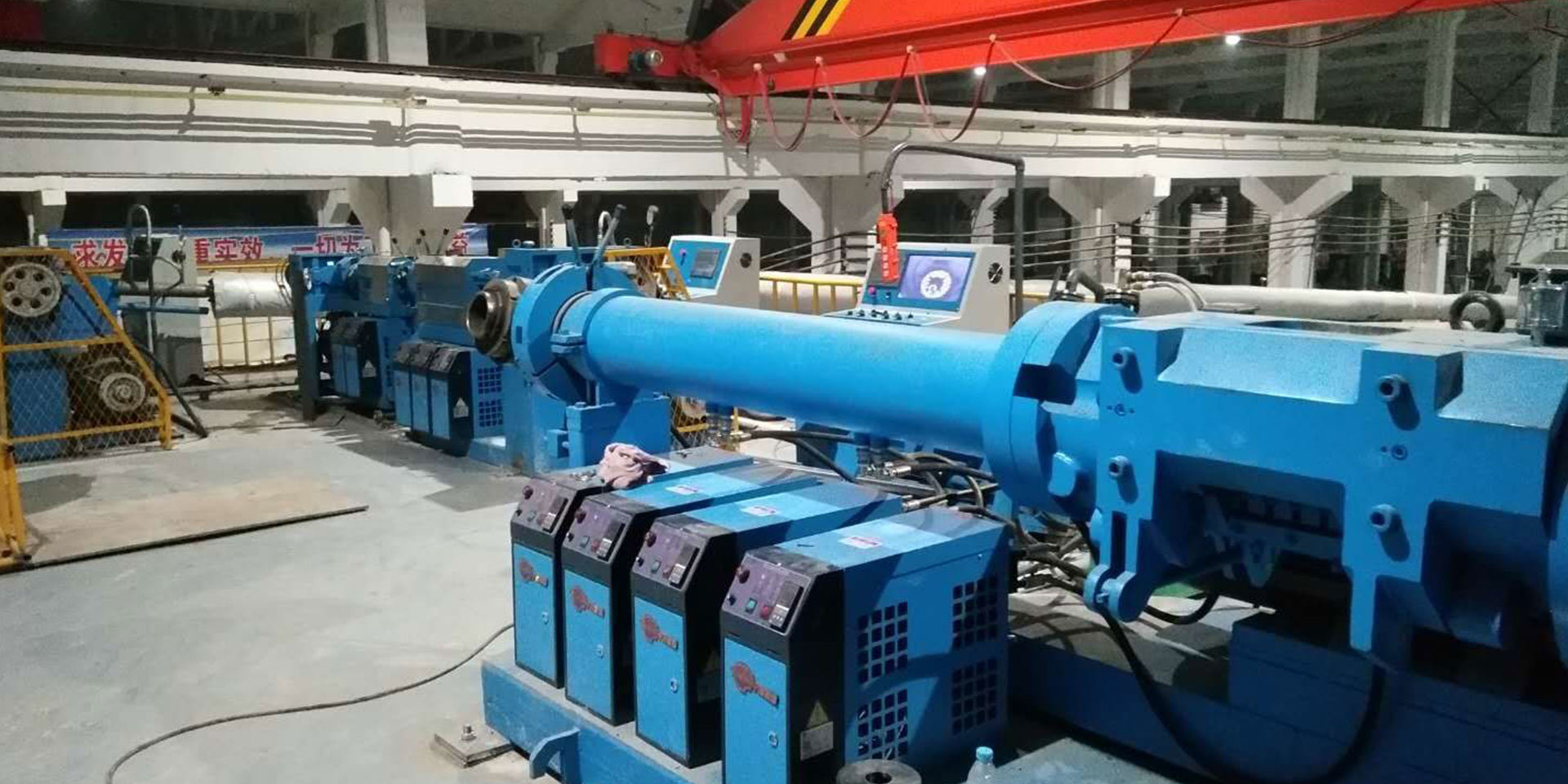
Received pay-off frame manufacturers: rubber cable equipment what need to pay attention to the following to introduce.
1. Before laying, it should be inspected. Its model, voltage and standard should conform to the plan, and its appearance should be intact and well insulated.
2 receiving and releasing frame manufacturer: according to the system wiring diagram, schematic diagram, panel wiring diagram, junction box wiring diagram, etc., check the cable specifications, standards and core numbers in its list.
3 According to the list, list the number, standard, starting point, ending point, length and direction of each cable, and list separately according to the laying sequence for actual laying.
4. Receiving and paying-off frame manufacturers: check their supports, cable protection pipes, etc. for any missing or wrong installation, and check whether the laying route is correct, whether there is any blockage or impassable place, whether the scaffolding along the way is firm, whether the lighting is prominent, scaffolding should be added where the construction is inconvenient, and lighting should be added where the light is insufficient.
5. Its temporary signboard is printed on ordinary paper, including the number, standard, starting point and ending point. It is hung on the head and tail of each cable and surrounded by transparent tape to prevent the signboard from falling off during finishing.
6. Collection and pay-off frame manufacturer: during the construction, there must be a special person to direct the construction, and explain in detail the number of cables to be laid, starting and ending, process requirements and safety precautions. during the laying process, according to the actual situation, the centralized ones shall be laid first, then the loose ones shall be laid, and then the short ones shall be laid.
7. Calculate the length of each cable according to the planned approach, arrange each cable reasonably, and cut its joints.
8. Collection and pay-off rack manufacturer: When laying, rubber-sheathed cable equipment should be led out from the top of the cable reel. If the opening of the lead-out end is not strict, tie it up with a binding line. The rolling speed of the cable reel should be well matched with the traction speed. The length of each traction should not be too long to avoid dragging on the ground. In the process of construction, if some scars are found to be severely flattened or bent, they should be stopped for inspection and identification and treated. In severe cases, they should be removed.
9. Personnel allocation: one person shall be set up every 6-8m at the straight end. According to the weight of each cable, one person shall be set up on each side of the turn. When crossing the passage, floor and wall, one person shall be set up at the top, bottom or front and back. When passing through the pipeline, one person shall be set up at each end. When the pipeline is too long or the cable is too large, one or two persons shall be added.
10. The power supply and control cables should not be placed on the same shelf. Generally, they should be placed from top to bottom on the shelf. The order is: high-voltage power, low-voltage power, control, signal and other cables.
11. For cables built side by side, the joints should be staggered. When they are exposed, the joints should be fixed with trays and marked. Rubber cables in the same layer of bridge must be laid layer by layer, arranged neatly, with common bending curvature. Cables drawn from the bridge must be coiled along the ladder and bound in rows.
Collection and pay-off frame manufacturer: introduction of matters needing attention in rubber sleeve cable equipment, come and collect!
recommend reading
Key Features to Look for in a Cold Feed Rubber Extruder for Electrical Wiring
Key Features to Look for in a Cold Feed Rubber Extruder for Electrical Wiring Understanding Cold Feed Rubber Extruders Cold feed rubber extruders play a crucial role in the manufacturing of electrical wiring. These machines process raw rubber materials into various forms, ensuring they meet specific standards for electrical applications. Understanding the key features of cold feed rubber extruders
Understanding Rubber Extruders: Key Insights for the Electrical Industry
In the electrical and cable industry, the rubber extruder plays a pivotal role in the manufacturing process, particularly when it comes to producing insulation and jacketing for wires and cables. A rubber extruder is a machine that shapes rubber materials into specific profiles or forms by forcing them through a die. Understanding the fundamentals of rubber extruders can significantly enhance oper
The Essential Guide to Cable Types in Production Lines
The Essential Guide to Cable Types in Production Lines Table of Contents Introduction to Cable Types in Production Lines Understanding Different Types of Cables Single-Core vs. Multi-Core Cables: Which Is Right for You? Types of Cables Commonly Used in Production Lines Power Cables Control Cables Data Cables Specialty Cables
The Essential Role of Plastic Extruders in Cable Manufacturing
Plastic extruders play a pivotal role in the modern manufacturing of electrical wires and cables, particularly in the creation of insulation and protective coatings that ensure durability and performance. These machines are designed to melt plastic pellets and then force the molten material through a die to create continuous shapes, making them indispensable in the production of various cable comp
Comparative Analysis: Different Types of Wire and Cable Extrusion Production Lines
Comparative Analysis: Different Types of Wire and Cable Extrusion Production Lines Introduction to Wire and Cable Extrusion Extrusion is a critical process in the production of wires and cables. This procedure involves forcing molten material through a die to create a continuous product with a fixed cross-sectional profile. In the context of the electrical industry, wires and cables are pivotal fo
Understanding Cold Feed Rubber Extruders: A Key Component in Electrical Wire and Cable Manufacturing
In the realm of electrical wire and cable manufacturing, the cold feed rubber extruder stands out as a pivotal technology. This specialized piece of equipment is designed to process rubber compounds at ambient temperatures, offering several advantages over traditional extrusion methods. Understanding the functionality and benefits of cold feed rubber extruders can help manufacturers optimize their