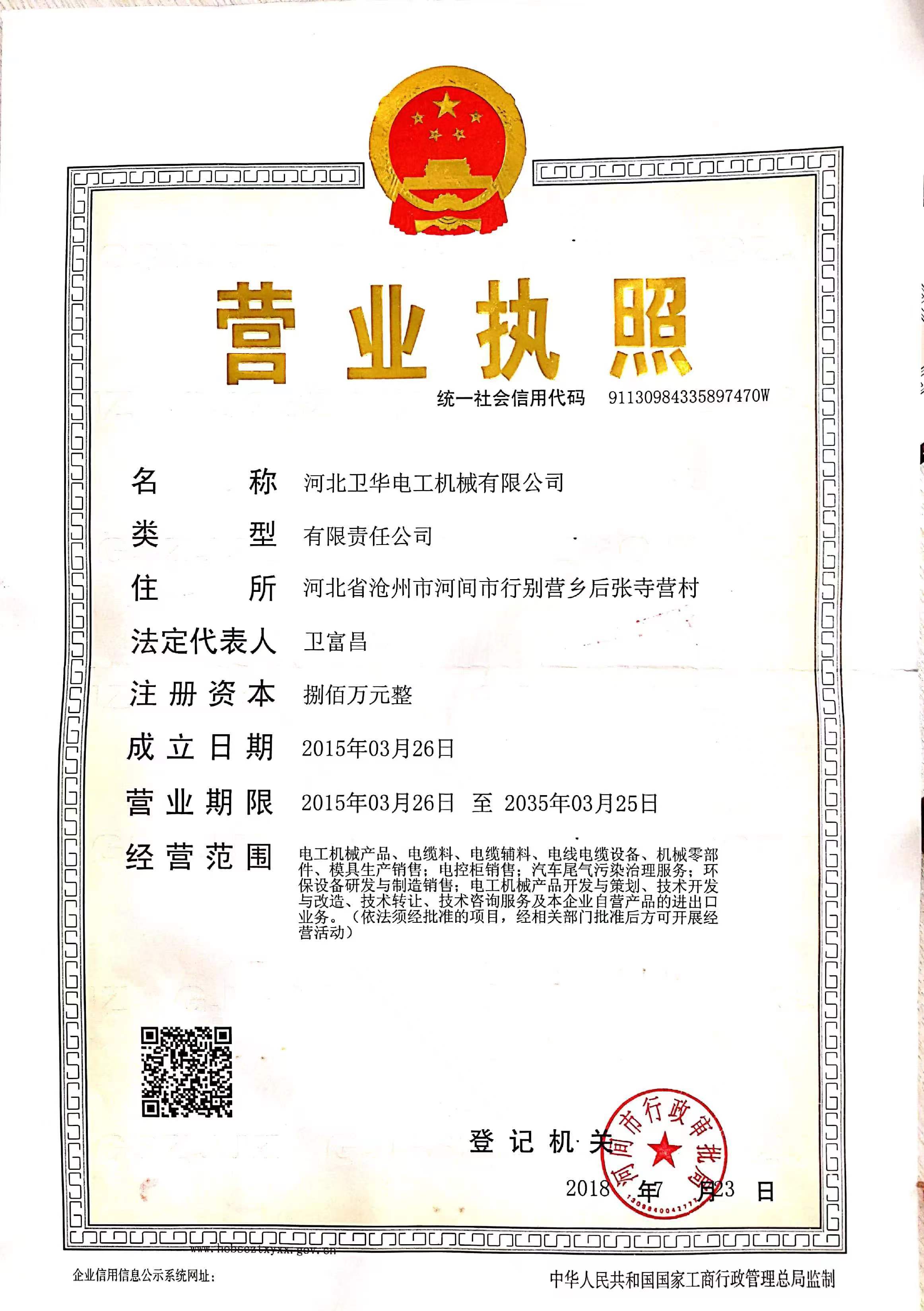
Weihua Electrical Machinery is a professional manufacturer of electrical machinery products integrating design, production, sales and service.




Understanding the Cable Production Line: Innovations and Best Practices
2025-10-07 10:10

At the heart of a cable production line is the raw material handling phase. The most commonly used materials include copper and aluminum, known for their excellent conductivity. Recent advancements in material science have led to the development of new alloys and compounds that offer improved performance characteristics, such as higher tensile strength and corrosion resistance. This enhancement in raw materials is crucial for producing cables that can withstand harsh environmental conditions, leading to longer service lives.
The second stage involves the extrusion process, where insulation and jackets are applied to the conductive core. Extrusion technology has evolved significantly, with innovations such as multi-layer extrusion and cross-linking techniques that provide enhanced insulation properties. These advancements not only improve the electrical performance but also contribute to the safety of the cables, as they reduce the risk of electrical failures and fires.
Another critical phase in the cable production line is the testing and quality assurance segment. Innovative technologies, such as automated testing equipment and real-time monitoring systems, allow manufacturers to conduct comprehensive quality checks at every stage of production. This reduces the likelihood of defects and ensures that only products meeting stringent standards reach the market. Additionally, the integration of data analytics helps in identifying potential issues early in the production process, facilitating quick adjustments and minimizing waste.
Efficiency is also a major focus in modern cable production lines. The adoption of Industry 4.0 principles, which include automation, data exchange, and smart manufacturing, has transformed traditional processes. Implementing robotics and automated systems can significantly enhance productivity, reduce labor costs, and minimize human error.
Finally, sustainability is becoming increasingly important in cable production. Many manufacturers are exploring eco-friendly materials and processes, such as the use of recyclable components and energy-efficient machinery. This not only reduces the environmental impact but also appeals to a growing market that prioritizes sustainability.
In conclusion, a well-optimized cable production line is essential for delivering high-quality electrical cables that meet today's demanding standards. By staying informed about the latest innovations and best practices, professionals in the electrical engineering industry can ensure their production lines are both efficient and sustainable. This understanding is key to maintaining a competitive edge in the ever-evolving landscape of cable manufacturing.
Understanding the Cable Production Line: Innovations and Best Practices
recommend reading
Key Features to Look for in a Cold Feed Rubber Extruder for Electrical Wiring
Key Features to Look for in a Cold Feed Rubber Extruder for Electrical Wiring Understanding Cold Feed Rubber Extruders Cold feed rubber extruders play a crucial role in the manufacturing of electrical wiring. These machines process raw rubber materials into various forms, ensuring they meet specific standards for electrical applications. Understanding the key features of cold feed rubber extruders
Understanding Rubber Extruders: Key Insights for the Electrical Industry
In the electrical and cable industry, the rubber extruder plays a pivotal role in the manufacturing process, particularly when it comes to producing insulation and jacketing for wires and cables. A rubber extruder is a machine that shapes rubber materials into specific profiles or forms by forcing them through a die. Understanding the fundamentals of rubber extruders can significantly enhance oper
The Essential Guide to Cable Types in Production Lines
The Essential Guide to Cable Types in Production Lines Table of Contents Introduction to Cable Types in Production Lines Understanding Different Types of Cables Single-Core vs. Multi-Core Cables: Which Is Right for You? Types of Cables Commonly Used in Production Lines Power Cables Control Cables Data Cables Specialty Cables
The Essential Role of Plastic Extruders in Cable Manufacturing
Plastic extruders play a pivotal role in the modern manufacturing of electrical wires and cables, particularly in the creation of insulation and protective coatings that ensure durability and performance. These machines are designed to melt plastic pellets and then force the molten material through a die to create continuous shapes, making them indispensable in the production of various cable comp
Comparative Analysis: Different Types of Wire and Cable Extrusion Production Lines
Comparative Analysis: Different Types of Wire and Cable Extrusion Production Lines Introduction to Wire and Cable Extrusion Extrusion is a critical process in the production of wires and cables. This procedure involves forcing molten material through a die to create a continuous product with a fixed cross-sectional profile. In the context of the electrical industry, wires and cables are pivotal fo
Understanding Cold Feed Rubber Extruders: A Key Component in Electrical Wire and Cable Manufacturing
In the realm of electrical wire and cable manufacturing, the cold feed rubber extruder stands out as a pivotal technology. This specialized piece of equipment is designed to process rubber compounds at ambient temperatures, offering several advantages over traditional extrusion methods. Understanding the functionality and benefits of cold feed rubber extruders can help manufacturers optimize their