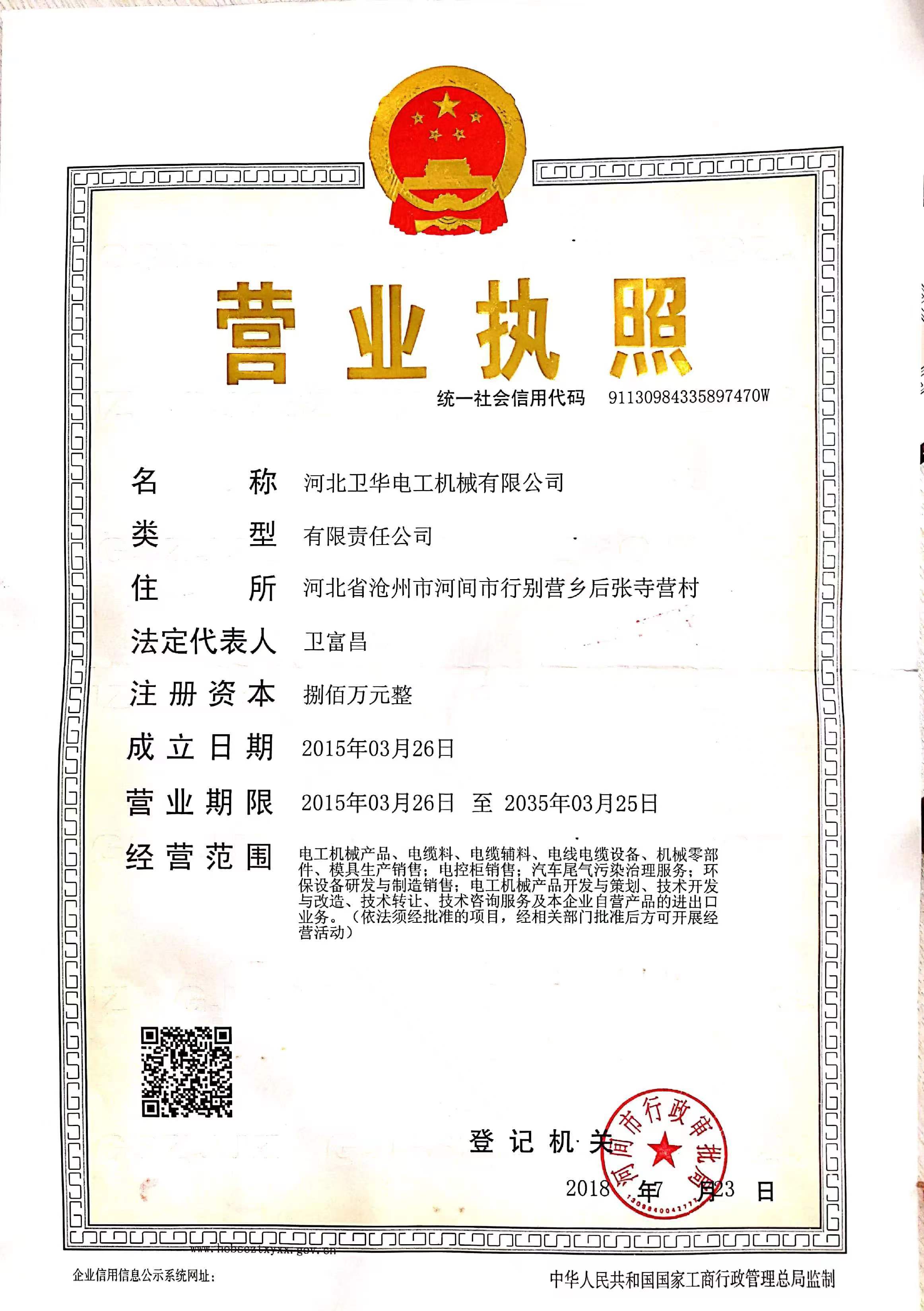
Weihua Electrical Machinery is a professional manufacturer of electrical machinery products integrating design, production, sales and service.




Maximizing Efficiency: The Role of Cold Feed Rubber Extruders in Cable Production
2025-06-08 13:40

Maximizing Efficiency: The Role of Cold Feed Rubber Extruders in Cable Production
Table of Contents
- 1. Introduction to Cold Feed Rubber Extruders
- 2. The Importance of Cold Feed Rubber Extruders in Cable Manufacturing
- 3. How Cold Feed Rubber Extruders Work
- 4. Advantages of Using Cold Feed Rubber Extruders
- 5. Applications in Cable Production
- 6. Best Practices for Operating Cold Feed Rubber Extruders
- 7. Common Issues and Troubleshooting Tips
- 8. Future Trends in Rubber Extrusion Technology
- 9. Conclusion
1. Introduction to Cold Feed Rubber Extruders
Cold feed rubber extruders are integral machines in the manufacturing process of cables and wires. They facilitate the extrusion of rubber compounds that form insulating or protective coatings around electrical conductors. By utilizing a cold feed system, these machines ensure that the material maintains its structure and viscosity throughout the process, resulting in superior quality products.
This article delves into the intricate world of cold feed rubber extruders, exploring their significance, working mechanisms, advantages, and future prospects in the cable production industry.
2. The Importance of Cold Feed Rubber Extruders in Cable Manufacturing
In the electrical industry, the quality of cables is paramount. Cold feed rubber extruders play a crucial role in ensuring that cables meet the highest standards of performance and safety. They are used to produce various types of insulated wires and cables, which are essential for power transmission and distribution.
The precision and efficiency offered by cold feed rubber extruders lead to:
- **Improved product consistency**: Uniform thickness and quality in cable insulation.
- **Enhanced performance**: Better heat resistance and durability.
- **Cost efficiency**: Lower waste and reduced energy consumption during production.
3. How Cold Feed Rubber Extruders Work
Cold feed rubber extruders operate through a well-defined process that involves the feeding, heating, and shaping of rubber compounds. Understanding the nuances of this process helps manufacturers maximize efficiency and product quality.
3.1 Key Components of Cold Feed Rubber Extruders
Key components of a cold feed rubber extruder include:
- **Feeding system**: This mechanism supplies the raw rubber material into the extruder.
- **Barrel and screw**: The barrel houses the screw that conveys, compresses, and heats the rubber material.
- **Heating elements**: These are essential for raising the temperature of the rubber to a pliable state.
- **Die head**: This is where the shaped rubber exits the extruder, forming the desired profile.
3.2 The Extrusion Process Explained
The extrusion process begins with the raw rubber being fed into the extruder. The screw rotates, pushing the material forward while applying heat through friction and external heating elements. As the rubber heats up, it becomes more malleable. Once the desired temperature is reached, the material is pushed through the die head, shaping it into the required form for cable insulation.
This process allows for:
- **Controlled temperature**: Maintaining optimal conditions for rubber processing.
- **Consistent flow**: Ensuring a uniform extrusion rate for high-quality output.
4. Advantages of Using Cold Feed Rubber Extruders
Cold feed rubber extruders offer numerous advantages that significantly boost production efficiency and product quality.
- **Energy Efficiency**: Compared to traditional extrusion methods, cold feed systems often consume less energy due to reduced heating requirements.
- **Material Versatility**: These extruders can handle a wide range of rubber compounds, including those with additives for enhanced properties.
- **Reduced Scrap Rates**: The precision of cold feed systems minimizes waste during production, leading to lower material costs.
5. Applications in Cable Production
Cold feed rubber extruders are pivotal in various applications within cable production, including:
- **Power Cables**: Insulating and protecting conductors from environmental factors.
- **Communication Cables**: Ensuring optimal signal transmission with minimal interference.
- **Specialty Cables**: Creating cables that meet specific industry standards or applications.
By utilizing cold feed rubber extruders in these applications, manufacturers can ensure high-quality products that meet rigorous industry standards.
6. Best Practices for Operating Cold Feed Rubber Extruders
To maximize the performance of cold feed rubber extruders, it is essential to follow best practices, including:
- **Regular Maintenance**: Routine inspections and maintenance of components ensure optimal performance.
- **Temperature Control**: Monitoring and adjusting temperature settings keeps the rubber at the ideal processing state.
- **Material Quality**: Using high-quality raw materials contributes to better extrusion results and product performance.
By adhering to these best practices, manufacturers can enhance the efficiency and output quality of their cable production processes.
7. Common Issues and Troubleshooting Tips
Despite their effectiveness, cold feed rubber extruders can encounter challenges. Common issues include:
- **Uneven Extrusion**: This may result from improper temperature settings or feed inconsistency. Adjusting the feed rate and ensuring uniform heating can resolve this.
- **Blockages**: Material build-up can cause slowdowns. Regular cleaning and inspection of the die can help prevent this issue.
- **Variability in Product Quality**: Inconsistencies can be caused by poor material quality or incorrect processing parameters. Conducting thorough checks on raw materials and maintaining precise control over the extrusion process is crucial.
8. Future Trends in Rubber Extrusion Technology
As the demand for high-quality cables and wires continues to grow, the future of rubber extrusion technology is promising. Innovations in automation and artificial intelligence are expected to enhance the efficiency of cold feed rubber extruders. Through smarter machinery, manufacturers can achieve better monitoring and control over the extrusion process, resulting in further reductions in waste and improvements in product quality.
Moreover, advancements in material science may lead to the development of new rubber compounds that offer enhanced properties, thus expanding the application range of cold feed rubber extruders in the cable production industry.
9. Conclusion
Cold feed rubber extruders play a vital role in maximizing efficiency in cable production. Their ability to produce high-quality insulation and protective coatings makes them indispensable in the electrical industry. By understanding how these machines work, the advantages they offer, and best practices for operation, manufacturers can significantly enhance their production processes. As technology continues to evolve, cold feed rubber extruders are set to become even more efficient, further solidifying their position in the cable manufacturing landscape. Embracing these innovations will ensure that the industry meets the increasing demand for reliable and high-performance electrical cables.
Understanding the role of cold feed rubber extruders is essential for any manufacturer aiming to maximize efficiency and product quality in the increasingly competitive cable production market.
Maximizing Efficiency: The Role of Cold Feed Rubber Extruders in Cable Production
recommend reading
Key Features to Look for in a Cold Feed Rubber Extruder for Electrical Wiring
Key Features to Look for in a Cold Feed Rubber Extruder for Electrical Wiring Understanding Cold Feed Rubber Extruders Cold feed rubber extruders play a crucial role in the manufacturing of electrical wiring. These machines process raw rubber materials into various forms, ensuring they meet specific standards for electrical applications. Understanding the key features of cold feed rubber extruders
Understanding Rubber Extruders: Key Insights for the Electrical Industry
In the electrical and cable industry, the rubber extruder plays a pivotal role in the manufacturing process, particularly when it comes to producing insulation and jacketing for wires and cables. A rubber extruder is a machine that shapes rubber materials into specific profiles or forms by forcing them through a die. Understanding the fundamentals of rubber extruders can significantly enhance oper
The Essential Guide to Cable Types in Production Lines
The Essential Guide to Cable Types in Production Lines Table of Contents Introduction to Cable Types in Production Lines Understanding Different Types of Cables Single-Core vs. Multi-Core Cables: Which Is Right for You? Types of Cables Commonly Used in Production Lines Power Cables Control Cables Data Cables Specialty Cables
The Essential Role of Plastic Extruders in Cable Manufacturing
Plastic extruders play a pivotal role in the modern manufacturing of electrical wires and cables, particularly in the creation of insulation and protective coatings that ensure durability and performance. These machines are designed to melt plastic pellets and then force the molten material through a die to create continuous shapes, making them indispensable in the production of various cable comp
Comparative Analysis: Different Types of Wire and Cable Extrusion Production Lines
Comparative Analysis: Different Types of Wire and Cable Extrusion Production Lines Introduction to Wire and Cable Extrusion Extrusion is a critical process in the production of wires and cables. This procedure involves forcing molten material through a die to create a continuous product with a fixed cross-sectional profile. In the context of the electrical industry, wires and cables are pivotal fo
Understanding Cold Feed Rubber Extruders: A Key Component in Electrical Wire and Cable Manufacturing
In the realm of electrical wire and cable manufacturing, the cold feed rubber extruder stands out as a pivotal technology. This specialized piece of equipment is designed to process rubber compounds at ambient temperatures, offering several advantages over traditional extrusion methods. Understanding the functionality and benefits of cold feed rubber extruders can help manufacturers optimize their