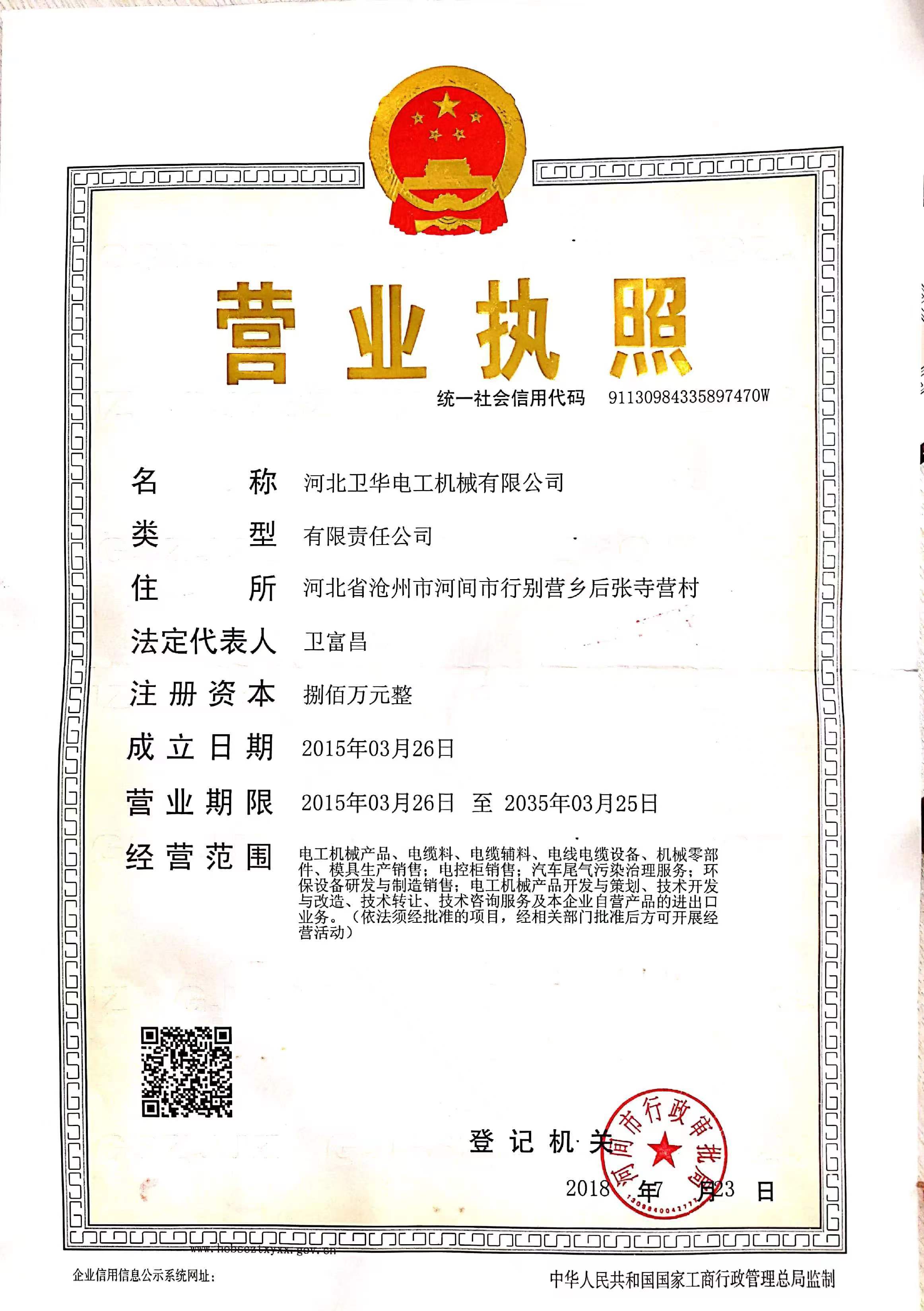
Weihua Electrical Machinery is a professional manufacturer of electrical machinery products integrating design, production, sales and service.




The Relationship Between Cable Production Lines and Product Quality: A Comprehensive Analysis
2026-01-20 09:50

The Relationship Between Cable Production Lines and Product Quality
In the highly competitive electric and electrical industry, the quality of cables plays a crucial role in the performance and safety of electrical systems. Understanding the relationship between cable production lines and product quality is essential for manufacturers, engineers, and consumers alike. This article explores various factors influencing cable production and how they directly affect the quality of the final product.
Understanding Cable Production Lines
What Are Cable Production Lines?
Cable production lines refer to the structured processes and machinery used in the manufacturing of electrical cables. This can include everything from raw material handling to the extrusion of materials and final product packaging. The efficiency and design of these production lines are pivotal in ensuring that the cables produced meet the necessary quality standards.
Components of a Cable Production Line
A cable production line typically consists of several key components:
1. **Raw Material Supply**: The production process begins with the procurement of high-quality raw materials, including copper for conductors and various polymers for insulation.
2. **Extrusion Equipment**: This machinery is responsible for forming the cable by coating the conductor with insulating materials. Precision in extrusion is vital for ensuring a uniform thickness and quality of the insulation layer.
3. **Twisting and Braiding Machines**: In multi-core cables, twisting and braiding machines are employed to enhance flexibility and mechanical strength.
4. **Quality Control Stations**: These are integrated into the production line to monitor various parameters like dimensional accuracy, insulation resistance, and thermal stability.
5. **Packaging Systems**: Finally, finished cables are packaged for delivery, ensuring they remain undamaged during transport.
The Importance of Quality in Cable Production
Why Quality Matters in Electrical Cables
The quality of electrical cables is paramount for several reasons:
- **Safety**: Substandard cables can lead to electrical failures, posing risks such as short circuits and fires.
- **Performance**: High-quality cables ensure efficient electrical conductivity and minimize losses.
- **Longevity**: Well-manufactured cables are more durable, reducing the need for frequent replacements and maintenance.
Standards and Regulations
Meeting industry standards is non-negotiable in cable production. Various organizations, such as the International Electrotechnical Commission (IEC) and Underwriters Laboratories (UL), set guidelines that manufacturers must adhere to. Compliance with these standards not only ensures product safety but also enhances market credibility.
Factors Influencing Cable Quality from Production Lines
Raw Material Quality
The initial quality of raw materials directly influences the end product. High-purity copper and superior insulating polymers are essential for producing reliable cables. Manufacturers need to establish strong relationships with suppliers to ensure consistent quality.
Technological Advancements in Production
The integration of advanced technologies into cable production lines can significantly enhance product quality. Automation, robotics, and IoT (Internet of Things) devices can improve precision and consistency. Technologies like real-time monitoring and data analytics allow manufacturers to identify issues before they impact quality.
Workforce Training and Skill Development
A skilled workforce is an invaluable asset in cable production. Continuous training programs ensure that workers are familiar with the latest technologies and quality control procedures, leading to better productivity and quality assurance.
Quality Control Measures in Cable Manufacturing
In-Line Quality Control
Implementing quality control measures within the production line is essential. This involves regular checks at various stages of the manufacturing process, including:
- **Dimensional checks**: Ensuring that cables meet specified measurements.
- **Electrical testing**: Verifying insulation resistance and conductivity.
- **Visual inspections**: Identifying surface defects or inconsistencies.
Final Product Testing
Once production is complete, every batch should undergo rigorous testing to ensure compliance with quality standards. This may include:
- **Thermal cycling tests**: Assessing cable performance under varying temperature conditions.
- **Mechanical testing**: Evaluating tensile strength and flexibility.
- **Environmental testing**: Understanding how cables perform in different environmental conditions.
Case Studies: Successful Implementation of Quality Control in Cable Production
Industry Leader A: Innovations in Extrusion
One leading cable manufacturer implemented a state-of-the-art extrusion line, enhancing their insulation uniformity by 30%. This improvement reduced the rate of insulation failures by 15%, significantly boosting overall product quality.
Industry Leader B: Automation and Robotics
Another manufacturer introduced robotics into their production line, which led to a 20% increase in efficiency. The automated systems provided consistent quality checks, resulting in a 10% reduction in defective cables.
Future Trends in Cable Production and Quality Assurance
Smart Manufacturing Solutions
The future of cable production lies in smart manufacturing. The use of AI and machine learning can predict potential failures and optimize production processes, leading to higher product quality.
Sustainability in Cable Production
As industries move towards sustainable practices, cable production is adapting as well. Utilizing eco-friendly materials and processes not only improves environmental impact but can also enhance product quality by reducing harmful substances and promoting better performance.
FAQs
1. How does raw material quality affect cable production?
Raw material quality is critical as it directly impacts electrical conductivity, insulation properties, and overall cable durability.
2. What are the key industry standards for cable quality?
Key standards include those set by IEC and UL, which govern safety, performance, and reliability requirements for electrical cables.
3. How can manufacturers ensure consistent quality in production?
Manufacturers can ensure consistent quality through in-line quality control measures, advanced technology integration, and ongoing workforce training.
4. What technologies are shaping the future of cable production?
Technologies such as automation, IoT, AI, and smart manufacturing solutions are revolutionizing cable production, enhancing quality, and efficiency.
5. Why is testing essential after cable production?
Testing ensures that cables meet safety and performance standards, reducing the risk of failures in real-world applications.
Conclusion
In conclusion, the relationship between cable production lines and product quality is intricate and multifaceted. By understanding the various components and processes involved, manufacturers can enhance quality control measures, adopt advanced technologies, and ultimately produce higher-quality cables. Maintaining a focus on quality not only ensures safety and longevity in electrical applications but also boosts a manufacturer's reputation and competitiveness in the market. As the industry continues to evolve, embracing innovation and adhering to stringent standards will be crucial for success.
The Relationship Between Cable Production Lines and Product Quality: A Comprehensive Analysis
recommend reading
Key Features to Look for in a Cold Feed Rubber Extruder for Electrical Wiring
Key Features to Look for in a Cold Feed Rubber Extruder for Electrical Wiring Understanding Cold Feed Rubber Extruders Cold feed rubber extruders play a crucial role in the manufacturing of electrical wiring. These machines process raw rubber materials into various forms, ensuring they meet specific standards for electrical applications. Understanding the key features of cold feed rubber extruders
Understanding Rubber Extruders: Key Insights for the Electrical Industry
In the electrical and cable industry, the rubber extruder plays a pivotal role in the manufacturing process, particularly when it comes to producing insulation and jacketing for wires and cables. A rubber extruder is a machine that shapes rubber materials into specific profiles or forms by forcing them through a die. Understanding the fundamentals of rubber extruders can significantly enhance oper
The Essential Guide to Cable Types in Production Lines
The Essential Guide to Cable Types in Production Lines Table of Contents Introduction to Cable Types in Production Lines Understanding Different Types of Cables Single-Core vs. Multi-Core Cables: Which Is Right for You? Types of Cables Commonly Used in Production Lines Power Cables Control Cables Data Cables Specialty Cables
The Essential Role of Plastic Extruders in Cable Manufacturing
Plastic extruders play a pivotal role in the modern manufacturing of electrical wires and cables, particularly in the creation of insulation and protective coatings that ensure durability and performance. These machines are designed to melt plastic pellets and then force the molten material through a die to create continuous shapes, making them indispensable in the production of various cable comp
Comparative Analysis: Different Types of Wire and Cable Extrusion Production Lines
Comparative Analysis: Different Types of Wire and Cable Extrusion Production Lines Introduction to Wire and Cable Extrusion Extrusion is a critical process in the production of wires and cables. This procedure involves forcing molten material through a die to create a continuous product with a fixed cross-sectional profile. In the context of the electrical industry, wires and cables are pivotal fo
Understanding Cold Feed Rubber Extruders: A Key Component in Electrical Wire and Cable Manufacturing
In the realm of electrical wire and cable manufacturing, the cold feed rubber extruder stands out as a pivotal technology. This specialized piece of equipment is designed to process rubber compounds at ambient temperatures, offering several advantages over traditional extrusion methods. Understanding the functionality and benefits of cold feed rubber extruders can help manufacturers optimize their